

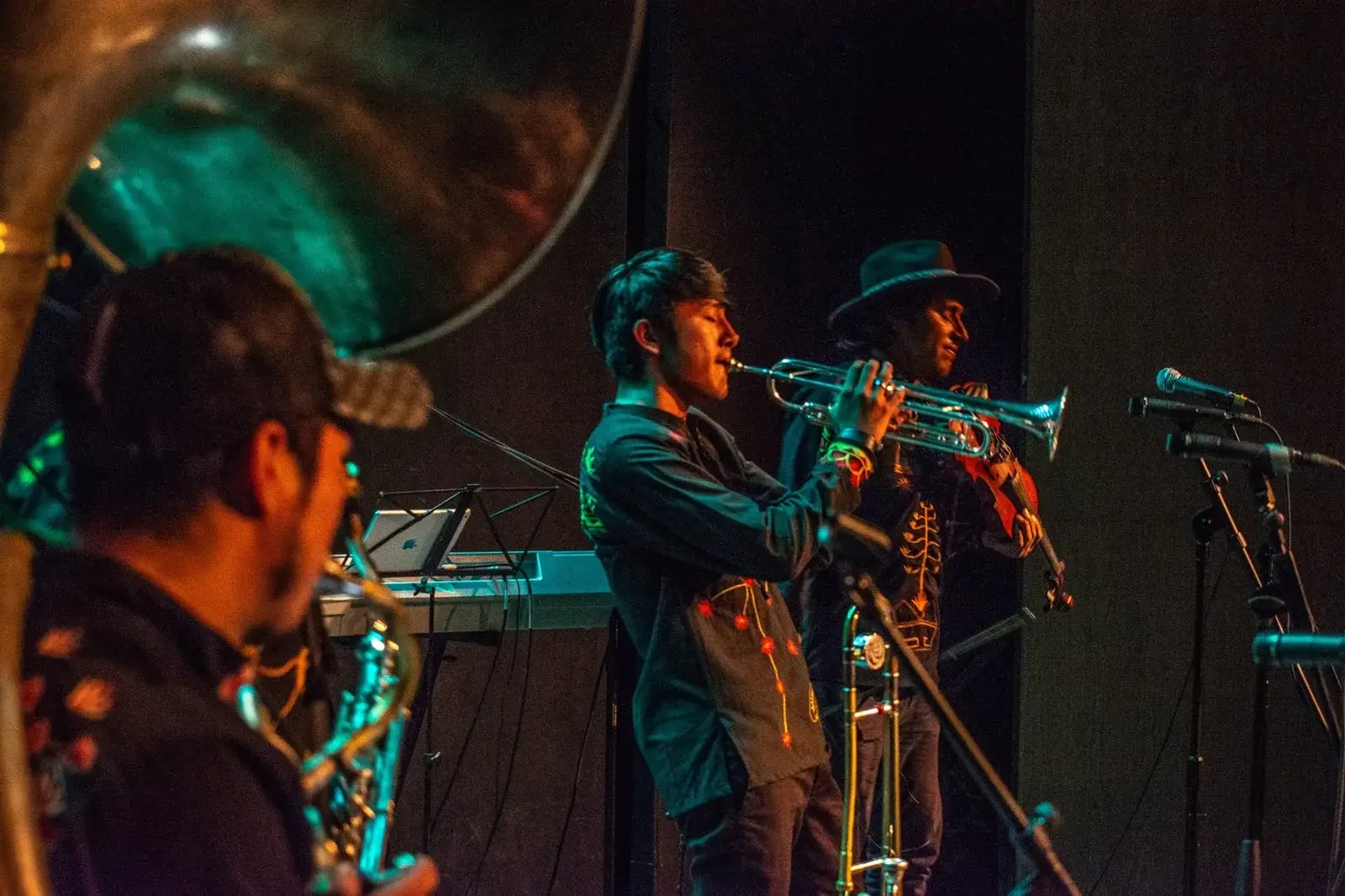
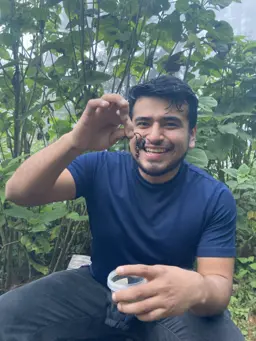
In Tlahui, nobody asks if you play an instrument. They ask which one. It's a town where you find kids as young as five or six already learning to read sheet music or carrying an instrument bigger than they are. Music there isn't a hobby — as the musicians themselves put it, it's what feeds them every day.
Out of all of that came Kujipy, a band that takes what it learned in the town band and hurls it into hip hop, reggae, funk, afrobeat, and electronics. All sung in ayuujk, the Mixe language. And the best part: they pull it off beautifully.
What is Kujipy?
In the Mixe language of Tlahuitoltepec, Kujipy means the highest chief, the one who commands. They describe themselves as an alternative and contemporary sonic proposal that articulates oral tradition by exploring and recreating different musical styles. In plain terms: they make new music without leaving their community behind.
"For us the Kujipy sound is innovation and a strengthening of traditional music," explains Paquito in the video they sent me for Qué Onda Oaxaca.
The lineup:
- ▸Luis Enrique Gómez Martínez: musical director (tenor sax, clarinet, guitar)
- ▸Eufronio Vásquez "Efro": synthesizer, trumpet, musical ideas
- ▸Wilfrido Vásquez Reyes "Wil": artistic coordinator, tuba
- ▸Francisco Jiménez Vázquez "Paquito": drums and percussion
- ▸Misael Jiménez Díaz "Mich": violin, synthesizer, trumpet, vocals, arts management
- ▸José Vásquez Reyes: trombone
- ▸Federico Hernández Vásquez: alto sax
- ▸Rubén Vásquez Núñez: trumpet

First, you have to understand what a band means in the Sierra Mixe
To understand Kujipy, you have to understand where they come from. In the Sierra Mixe, the town band didn't start as a business. It was played as a service to the community. The band went wherever the authorities sent them or wherever they were invited, working as a reciprocal exchange between towns: today I play at your festival, tomorrow you play at mine. A kind of indirect diplomacy — with brass and a few mezcals thrown in.
If you want to know more, the ayuujk writer Félix Reyes just launched Entre Siip Antuun y 'Chu' Rasgado: breve historia de las bandas filarmónicas mixes.
In Tlahui this tradition runs deep. Every year the town forms its municipal band with its own school, and then there's the CECAM (Centro de Capacitación Musical y Desarrollo de la Cultura Mixe), which this year marks 49 years training musicians in the mountains. Every Kujipy member came out of CECAM: each of them has played in the town bands, serving the community at festivals and traveling to play in other communities.
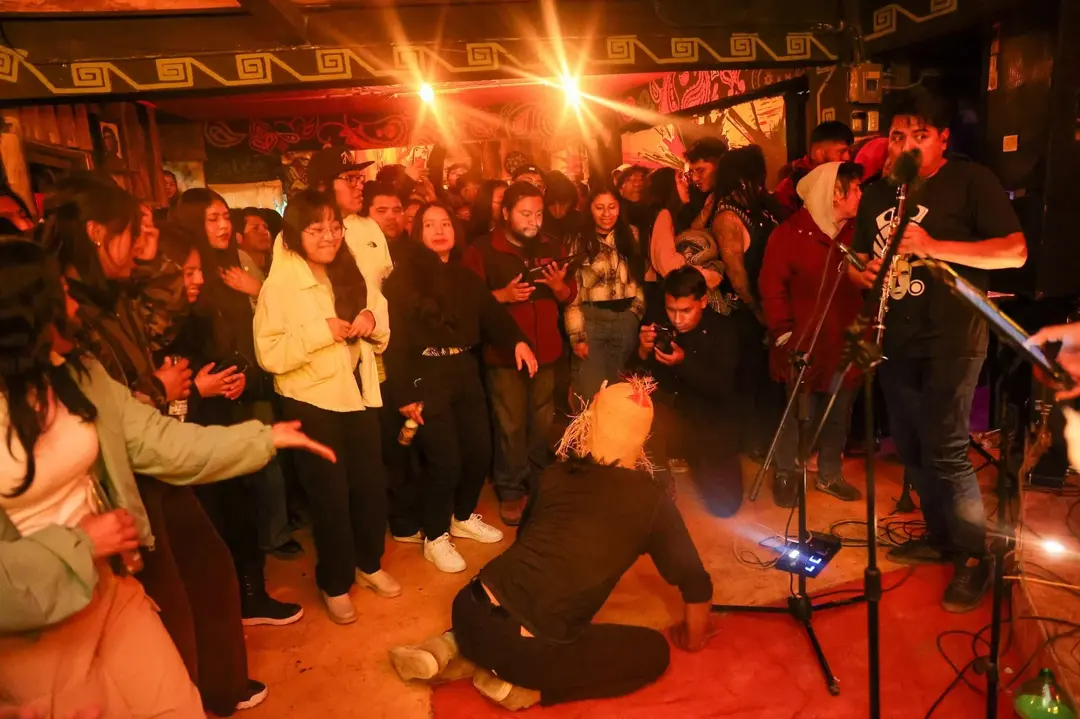
From the town band to the rehearsal room
Kujipy started taking shape around 2018, though the idea had been floating around before that. They had known each other their whole lives — from the municipal band and from other groups they'd played in together. "We always had this urge to make music that was maybe a little new, but with our own style, music that comes from us, without any restrictions," says Luis Enrique.
They started with three or four people, working from drafts of compositions they'd been carrying since music school. Then Wil joined with the tuba, other friends from town came on board, and they grew to five or six. Along the way several musicians have passed through, and some of the original members had to migrate in search of opportunities — a story that everyone in the mountains knows by heart. But the band renewed itself and kept going.
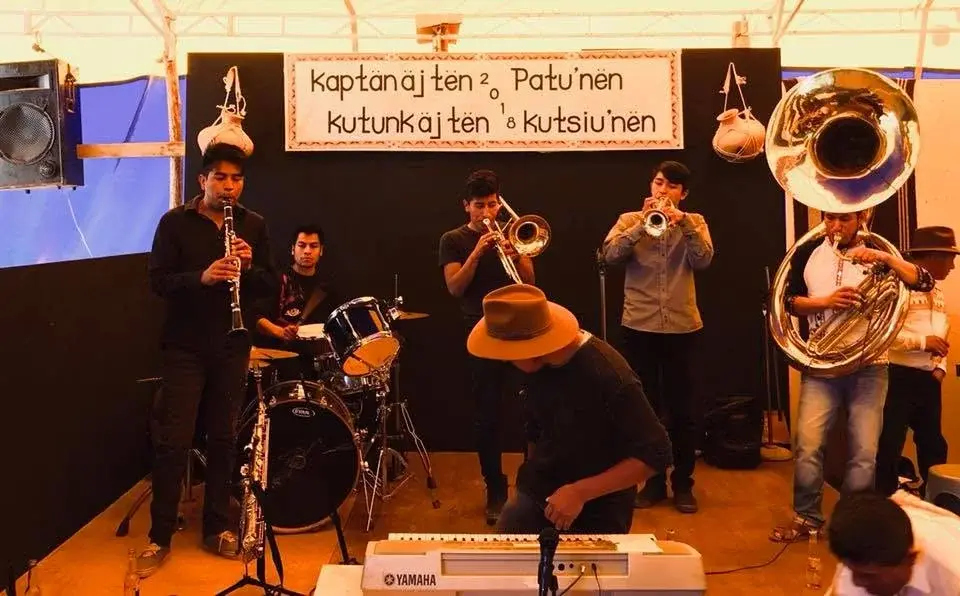
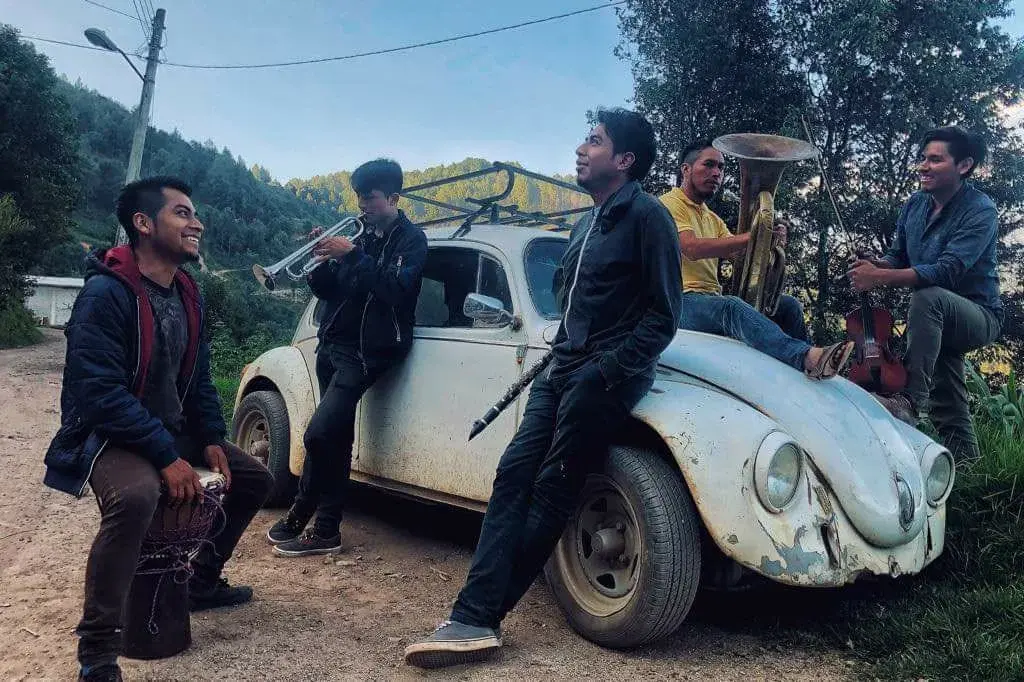
The formula is the sum of everyone's experience. The same band music has taken them to other towns, to cities, and some of them to other countries. "Kujipy is the summary, the accumulation of those experiences," Paquito explains. Some members started with Balkan music, and somebody said: "what if we do our own thing?" And so, through years of work, conversations, mezcal, and coffee at someone's house, the sound emerged.
Instead of electric bass, many songs run on the tuba with a heavy low end. The brass section brings the punch. And the language is non-negotiable: "We don't necessarily think people need to understand our language. If we make a good proposal, just hearing the sounds of the music and the language can be enchanting," one of the band members says.
The award that confirmed they were onto something
One of their first songs was "Jakam," where they experimented with hip hop and electronics layered with brass and strings. They entered it in the national competition De Tradición y Nuevas Rolas, run by Mexico's Secretaría de Cultura to support young musicians from Indigenous communities creating in their own languages. In 2023, Kujipy placed among the top 20 winners out of 94 participants from across the country. "That's when we realized this project had legs," says Luis Enrique.
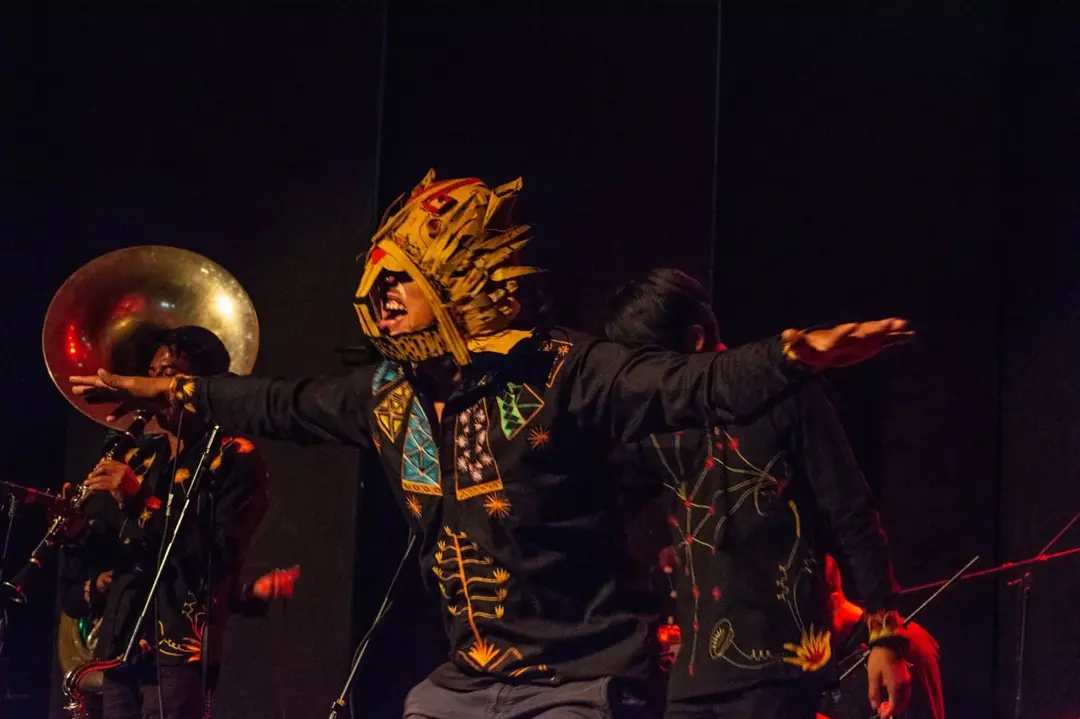
Their music: two albums to listen to right now
Jäjtä'äky (2022)
Their first body of work, made at home: they rehearsed and recorded in a house in the village with their own microphones and edited everything themselves. It includes "Jäjtä'äky," a reggae track inspired by dawn in Tlahuitoltepec that became one of their most loved songs, alongside "Baltipsy" and "Tsapwäk." Together with the single "Jakam" these form their first chapter. The underlying message: the Mixe language works for any genre.
Käjts, their new album (2026)
In Tlahui, an ear of corn with many colors — white kernels, purple, red, all mixed together — is called käjts: multicolor. That's the concept behind the album. "Like corn: in the end you consume it, but you also appreciate it for its individual beauty," the band explains. Musically, käjts translates to multistyle and multisound: a project that holds many things together while sounding like one. That's why all five tracks share the same screen-print design on the cover, even though none of them sounds like the others:
- ▸"Libertäj": the oldest one, born when Luis Enrique's demo and Efro's meshed together in key, rhythm, and beat as if by design.
- ▸"Xojotp": composed by Efro, it means something like "among the oak trees" — walking through the forest.
- ▸"pïtij": its literal translation is "I don't know." A funk track with brass, synthesizer, and guitar.
- ▸"Afrokojpk": pure afrobeat, a melody Mich brought back from time spent in Madagascar. Afro for the afrobeat, kojpk for the mountain: the afro of the mountain.
- ▸"Suun Pasuun": the calling card. It opens with violin — the string instrument that sounded in the mountains before brass arrived — moves through synthesizers, funk, and electronics, and closes with a Mixe son in six-eight time, the rhythm everyone in Tlahui knows how to dance to. It's a son that isn't quite a son. It runs over ten minutes, because, as Paquito puts it, the idea is not to limit yourself to what the pop market demands: let the imagination walk and let the song end when it needs to. It has a music video filmed in the community by fellow musicians from the village.
New doesn't always land easily
It has to be said: in a region where traditional music is the air you breathe, making something different isn't easy. The tradition carries weight, and there's no shortage of people who greet anything that sounds "strange" next to a son with suspicion. But listening to Kujipy makes it clear this isn't rupture — it's continuation. The traditional, they say, is something they already lived, shared, and learned from. Kujipy is a step forward, toward a different sound, with tradition carried on their backs.
At the end of the video one of them puts it better than I could: in the city the background noise is cars; in Tlahui, while they were recording, the background sound was a band playing sones. That's what they live with, and what Kujipy wants to preserve on a record, in a recording, in a video. To rescue, to resist: "Our resistance is in our mother tongue, the ayuujk."
Why this project moves me
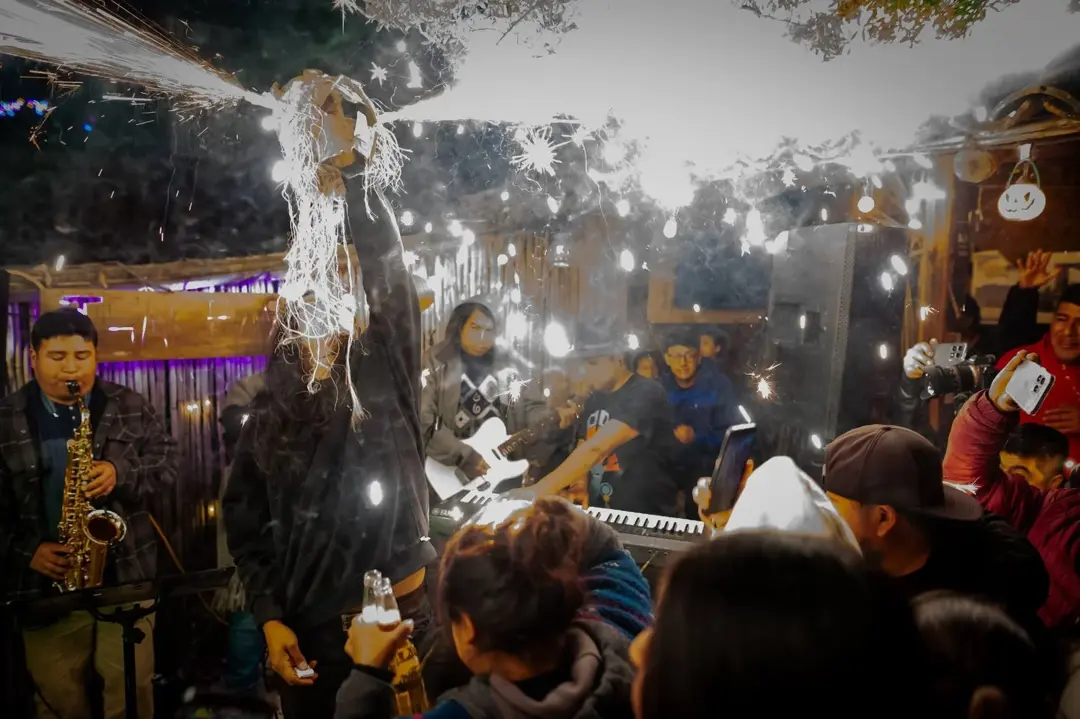
Here at Qué Onda Oaxaca I get to cover a lot of things, but when it's in ayuujk, I do it with extra pleasure. Watching a band from the mountains make something new without losing their roots — with their own style and their own sound — is exactly the kind of story I want to tell. Oaxaca isn't just postcards and Guelaguetza for tourists: there are people creating brilliant things from their own communities.
So the task here is simple: listen to them on every platform, share them, and if there's a show — go. I'm heading to Tlahui on Monday the 16th of November, for the 49th anniversary of CECAM, where Kujipy is performing. I'll be there to dance and to cover the whole thing with photos and video. See you there.
In the meantime, here's the full interview they sent me from Tlahui:
Listen to and follow Kujipy
- ▸Official site: kujipy.com
- ▸YouTube: @kujipyoficial
- ▸Spotify: Kujipy on Spotify
- ▸Apple Music: Kujipy on Apple Music
- ▸Instagram: @kujipy
- ▸Facebook: Kujipy
- ▸TikTok: @kujipy
Frequently asked questions
What does Kujipy mean in ayuujk?
In the Mixe language of Tlahuitoltepec, kujipy means the highest chief, the one who commands.What language does Kujipy sing in?
They sing in ayuujk, the Mixe language of Santa María Tlahuitoltepec, Oaxaca.Where can I listen to Kujipy?
On Spotify, Apple Music, and YouTube. Their latest album is Käjts (2026). Search "Kujipy" on any platform or go directly to kujipy.com.What is CECAM in Tlahuitoltepec?
The Centro de Capacitación Musical y Desarrollo de la Cultura Mixe (CECAM) — a music school that has been training musicians in the Sierra Mixe for 49 years. Every Kujipy member was trained there.What genres does Kujipy mix?
Afrobeat, funk, reggae, hip hop, and electronics — all built on a Mixe son base with brass instruments, tuba, and strings, and sung entirely in ayuujk.☕ Did you enjoy this story? We write Qué Onda Oaxaca without editorial sponsors. Buy us a coffee and help us keep going.
📚 Want to read more? Browse our blog: more stories about people doing cool things in Oaxaca.
🛍️ Want to take a piece of Oaxaca home? Our little shop has curated local pieces. What you buy there keeps this cultural guide free.
📣 Have a band, project, or cultural business? Get featured in our editorial section Destacados. Advertise here: reach our community and help us sustain the project.
🗺️ Planning a trip to Oaxaca? Browse our practical guides — transport, safety, what to do, all written from here.
🎭 This week in Oaxaca: Check our events calendar — concerts, markets, cultural events, all free and updated.
✍️ Know a project we should cover? Write to mezcalspeaks@gmail.com.
For this week's events, search "Qué Onda Oaxaca" or check our event calendar.
— mish Dary, Director · Qué Onda Oaxaca