
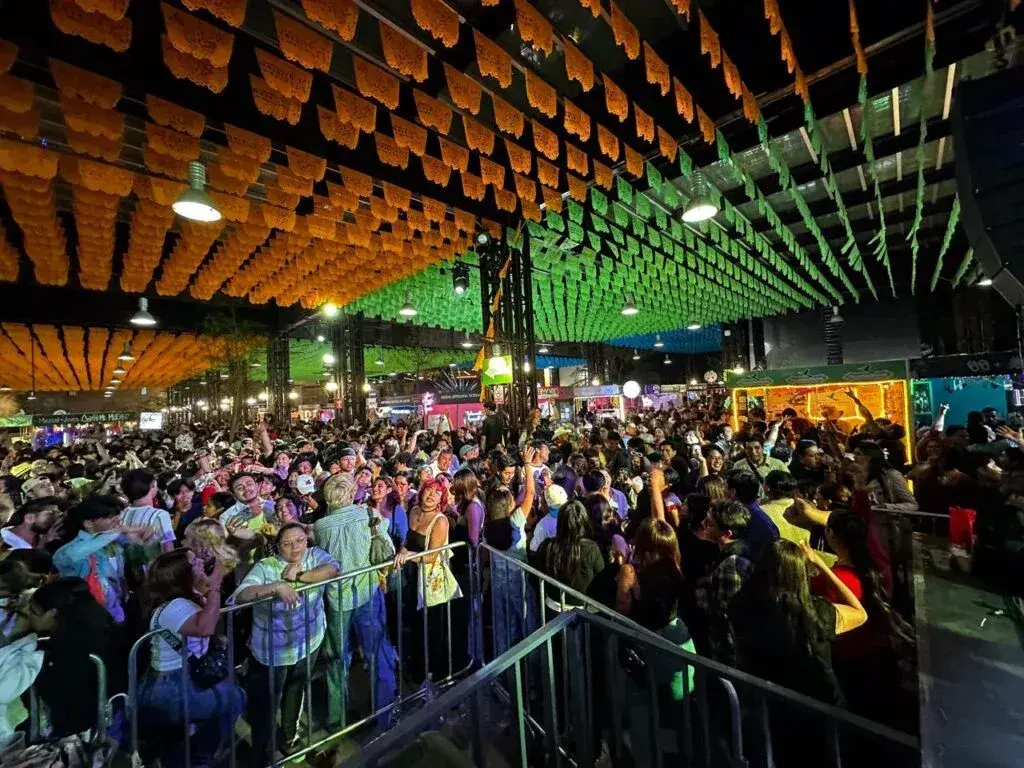
If the Guelaguetza is Oaxaca's most photographed cultural event, the International Mezcal Fair (Feria Internacional del Mezcal or FAIM) is probably the most enjoyed on the ground level. Every July, the Oaxaca Cultural and Convention Center (CCO) turns into the largest and most important open bar in Mexico.
But before you buy your ticket thinking about drinking until dawn, there are a few things you should know. This isn't a frat party; it's an agro-industrial and cultural exhibition where you'll find mezcals you'll rarely see in a supermarket, producers who inherited their craft from their great-grandparents, and prices ranging from affordable to super-premium.
This guide is meant to help you survive the fair, avoid buying mediocre spirits at luxury prices, and understand why having 100 producers together in one hall is something worth experiencing.
The Basics: Dates, Location, and Tickets 2026
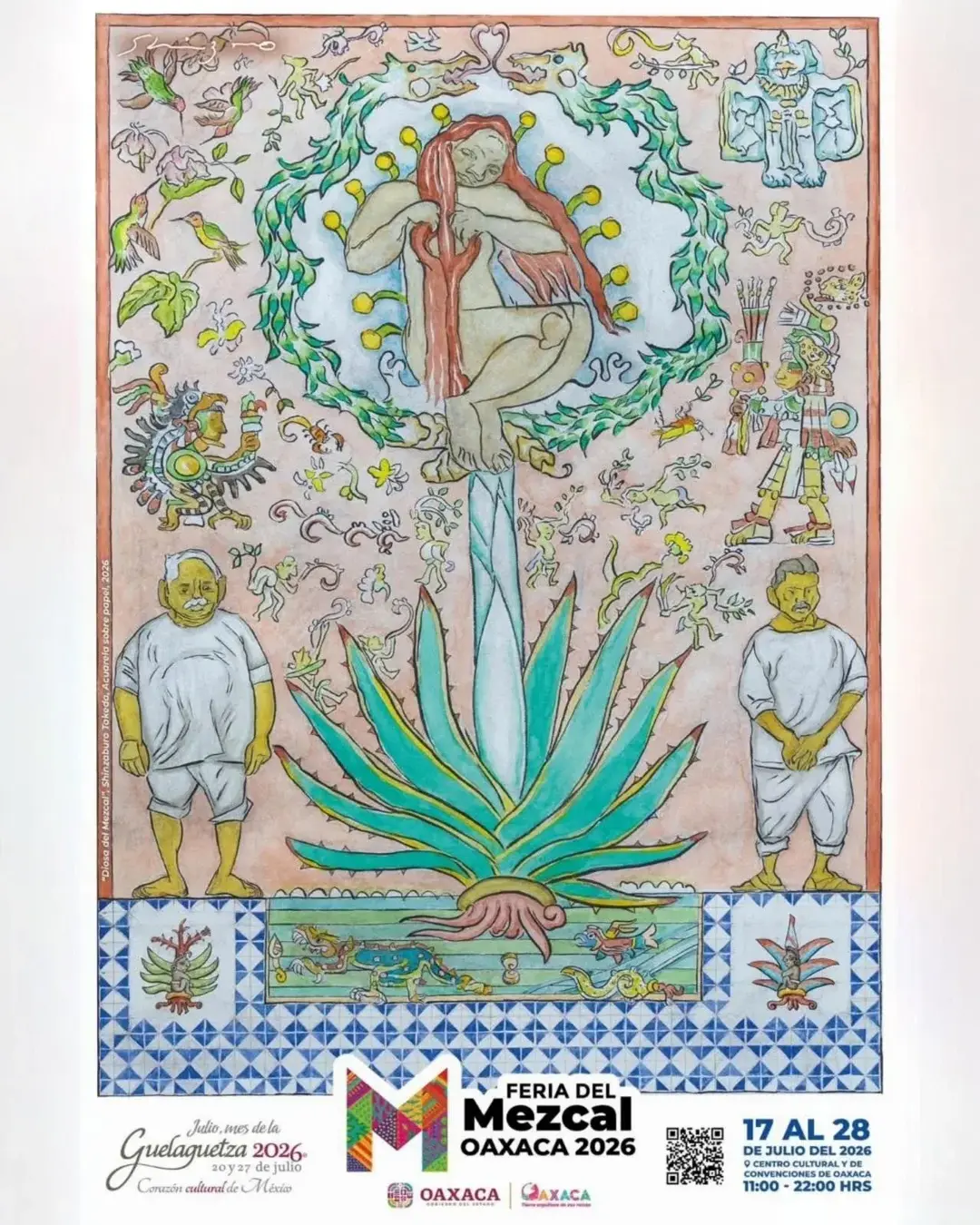
- ▸Dates: July 17 to July 28, 2026
- ▸Hours: 11:00 am to 10:00 pm (Box office closes at 9:00 pm)
- ▸Venue: Centro Cultural y de Convenciones de Oaxaca (CCO) in Santa Lucía del Camino.
- ▸Entry Cost: $80 MXN (cash). Free for children under 12 and seniors with INAPAM ID.
Important: This year's (2026) ticket proceeds go to the Hogar Primavera de Vivienda Bienestar Oaxaca program.
How to get to the CCO (And not get lost)
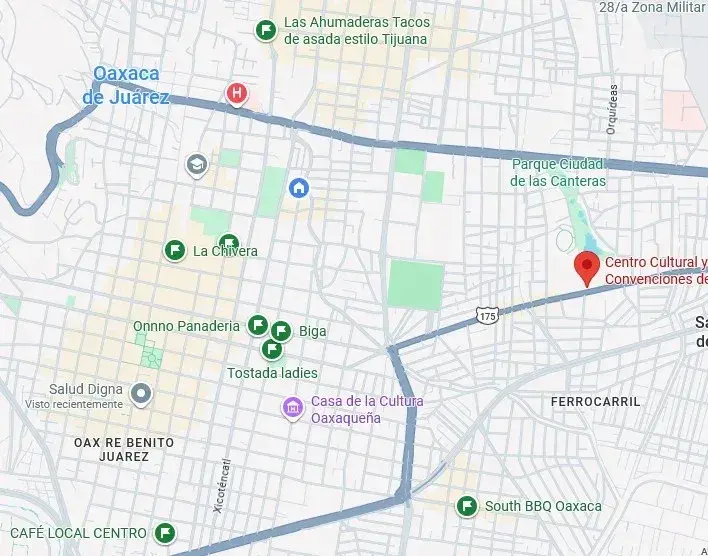
1. BinniBus (Best Option): The government usually runs special routes ("Rutas Guelaguetza") from downtown to the CCO for $8 pesos. It's safe, direct, and saves you the nightmare of parking. 2. Walking: If you're staying in Jalatlaco or the far east side of downtown, it's about a 15-20 minute walk. Very safe during the day, and at night there's always a crowd walking back. 3. Taxi / DiDi: A DiDi from the zócalo will cost between $70 and $120 pesos depending on the time. Be patient when requesting a ride back, as demand explodes at 10 pm.
What's Inside (It's not just Mezcal)
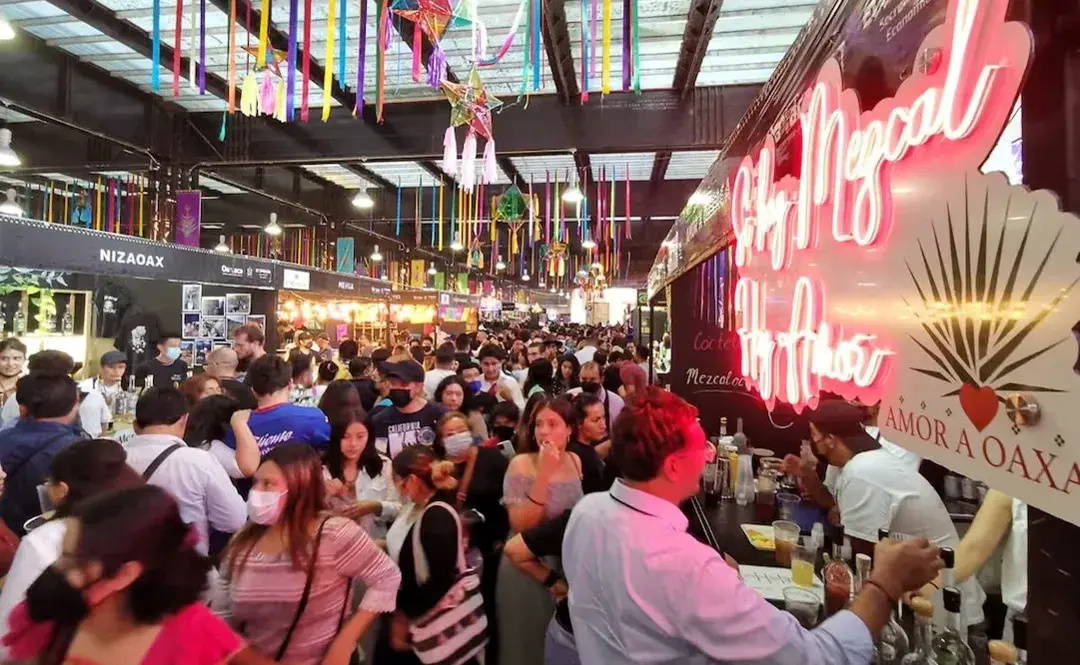
Your $80-peso ticket gives you access to the entire venue. The space is strategically divided:
| Area | Exhibitors | What you'll find |
|---|---|---|
| **Mezcal Pavilion** | 100–106 companies | Certified mezcals with official SHCP tax seal |
| **Artisan Pavilion** | 208 artisans | Black clay, alebrijes, textiles from all regions |
| **Agro-industrial & Coffee** | 24 producers + 14 coffee brands | Agave derivatives, salsas, jams, specialty coffee |
| **Gastronomic Zone** | 20 stands | Tlayudas, moles, traditional Oaxacan antojitos |
| **Craft Beer & Music Forum** | 16 breweries | Open-air zone with live music stage every day |
FAIM 2026 Event Program
Two simultaneous stages every day: Recinto Ferial (indoor main stage) and Área Verde (outdoor stage). Some days include activities at the Coffee Pavilion (Pabellón Café). Program is subject to changes by the organizers.
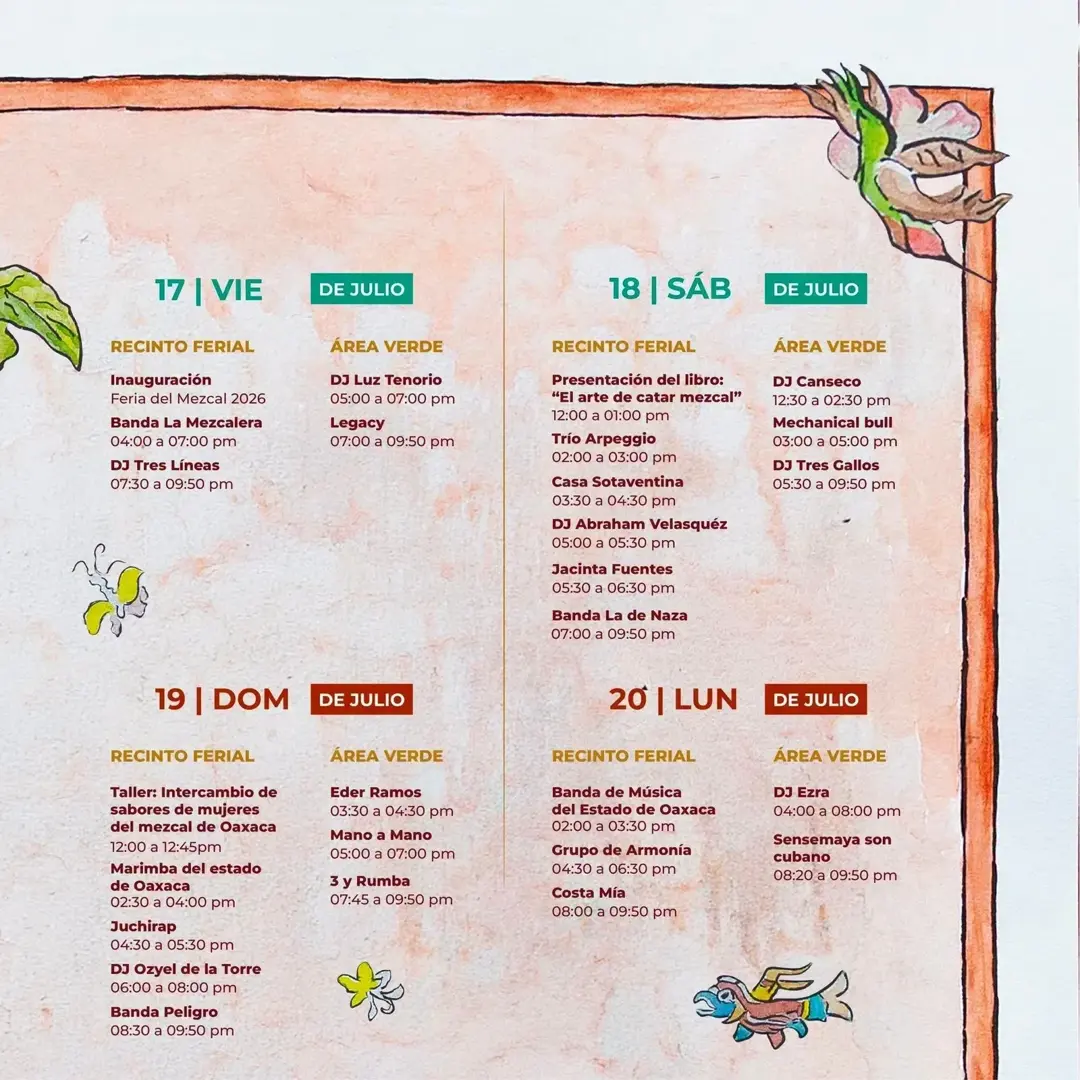
Friday, July 17 — Opening Day
Recinto Ferial (Main Stage)- ▸Official inauguration of the Feria del Mezcal 2026
- ▸04:00–07:00 pm · Banda La Mezcalera
- ▸07:30–09:50 pm · DJ Tres Líneas
- ▸05:00–07:00 pm · DJ Luz Tenorio
- ▸07:00–09:50 pm · Legacy
Saturday, July 18
Recinto Ferial- ▸12:00–01:00 pm · Book presentation: "El arte de catar mezcal" (The art of tasting mezcal)
- ▸02:00–03:00 pm · Trio Arpeggio
- ▸03:30–04:30 pm · Casa Sotaventina
- ▸05:00–05:30 pm · DJ Abraham Velasquéz
- ▸05:30–06:30 pm · Jacinta Fuentes
- ▸07:00–09:50 pm · Banda La de Naza
- ▸12:30–02:30 pm · DJ Canseco
- ▸03:00–05:00 pm · Mechanical Bull
- ▸05:30–09:50 pm · DJ Tres Gallos
Sunday, July 19
Recinto Ferial- ▸12:00–12:45 pm · Workshop: Women mezcal makers flavor exchange — Oaxaca
- ▸02:30–04:00 pm · Marimba del Estado de Oaxaca
- ▸04:30–05:30 pm · Juchirap
- ▸06:00–08:00 pm · DJ Ozyel de la Torre
- ▸08:30–09:50 pm · Banda Peligro
- ▸03:30–04:30 pm · Eder Ramos
- ▸05:00–07:00 pm · Mano a Mano
- ▸07:45–09:50 pm · 3 y Rumba
Monday, July 20
Recinto Ferial- ▸02:00–03:30 pm · Banda de Música del Estado de Oaxaca
- ▸04:30–06:30 pm · Grupo de Armonía
- ▸08:00–09:50 pm · Costa Mía
- ▸04:00–08:00 pm · DJ Ezra
- ▸08:20–09:50 pm · Sensemaya Son Cubano
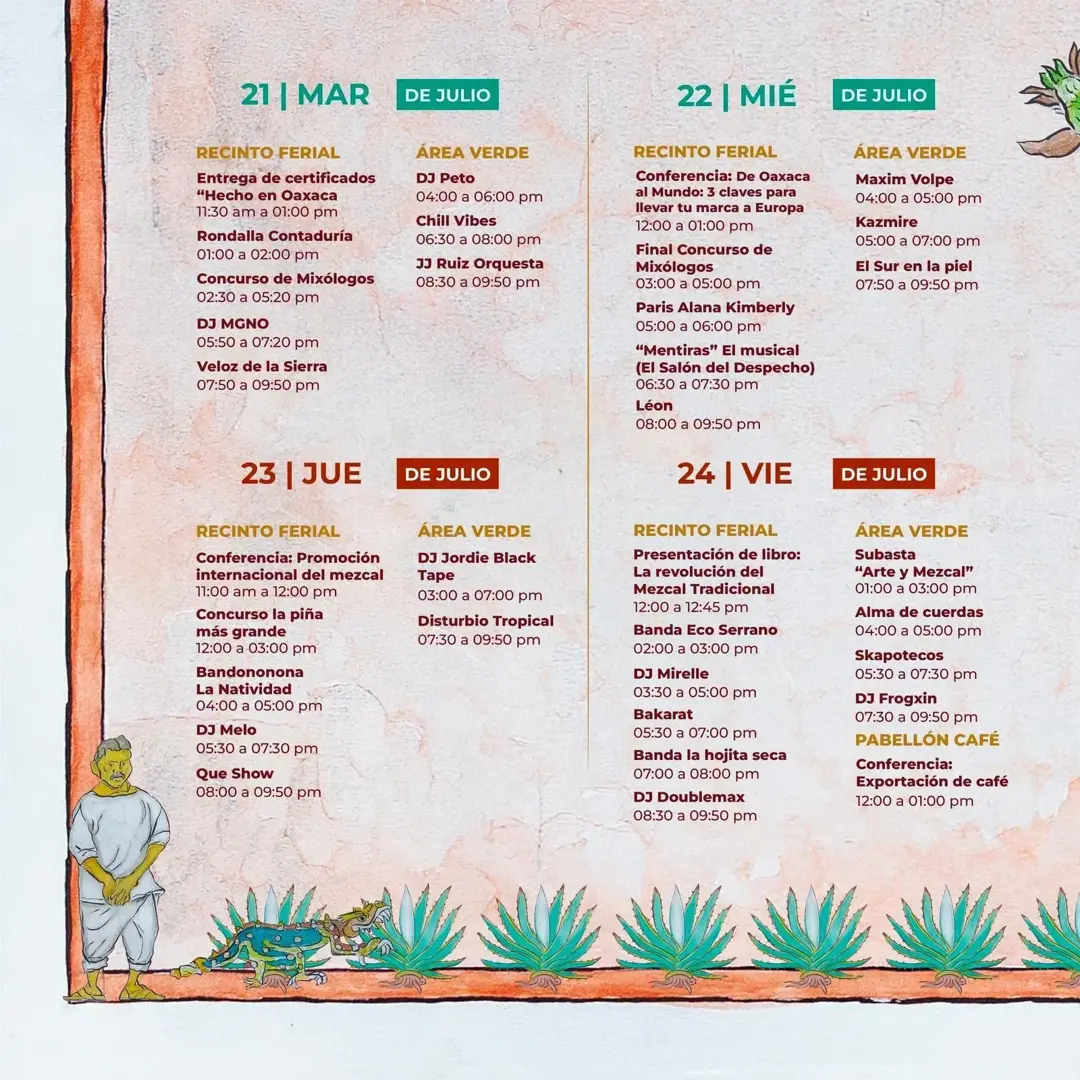
Tuesday, July 21
Recinto Ferial- ▸11:30 am–01:00 pm · "Hecho en Oaxaca" (Made in Oaxaca) Certificate Ceremony
- ▸01:00–02:00 pm · Rondalla Contaduría
- ▸02:30–05:20 pm · Mixologist Competition
- ▸05:50–07:20 pm · DJ MGNO
- ▸07:50–09:50 pm · Veloz de la Sierra
- ▸04:00–06:00 pm · DJ Peto
- ▸06:30–08:00 pm · Chili Vibes
- ▸08:30–09:50 pm · JJ Ruiz Orquesta
Wednesday, July 22
Recinto Ferial- ▸12:00–01:00 pm · Conference: From Oaxaca to the World — 3 keys to taking your brand to Europe
- ▸03:00–05:00 pm · Mixologist Competition Finals
- ▸05:00–06:00 pm · Paris Alana Kimberly
- ▸06:30–07:30 pm · "Mentiras" The Musical (El Salón del Despecho)
- ▸08:00–09:50 pm · León
- ▸04:00–05:00 pm · Maxim Volpe
- ▸05:00–07:00 pm · Kazmire
- ▸07:50–09:50 pm · El Sur en la Piel
Thursday, July 23
Recinto Ferial- ▸11:00 am–12:00 pm · Conference: International Promotion of Mezcal in Mexico
- ▸12:00–03:20 pm · Biggest Piña (Agave Heart) Competition
- ▸04:00–05:00 pm · Bandononona La Natividad
- ▸05:30–07:30 pm · DJ Melo
- ▸08:00–09:50 pm · Que Show
- ▸03:00–07:00 pm · DJ Jordie Black Tape
- ▸07:30–09:50 pm · Disturbio Tropical
Friday, July 24
Recinto Ferial- ▸12:00–12:45 pm · Book presentation: La revolución del Mezcal Tradicional (The Traditional Mezcal Revolution)
- ▸02:00–03:00 pm · DJ Serrano
- ▸03:30–05:00 pm · DJ Mirelle
- ▸05:30–07:00 pm · Bakarat
- ▸07:00–08:00 pm · Banda la Hojita Seca
- ▸08:30–09:50 pm · DJ Doublemax
- ▸01:00–03:00 pm · "Arte y Mezcal" Auction
- ▸04:00–05:00 pm · Alma de Cuerdas
- ▸05:30–07:30 pm · Skapatecos
- ▸07:30–09:50 pm · DJ Frogxin
- ▸12:00–01:00 pm · Conference: Coffee Export Strategies
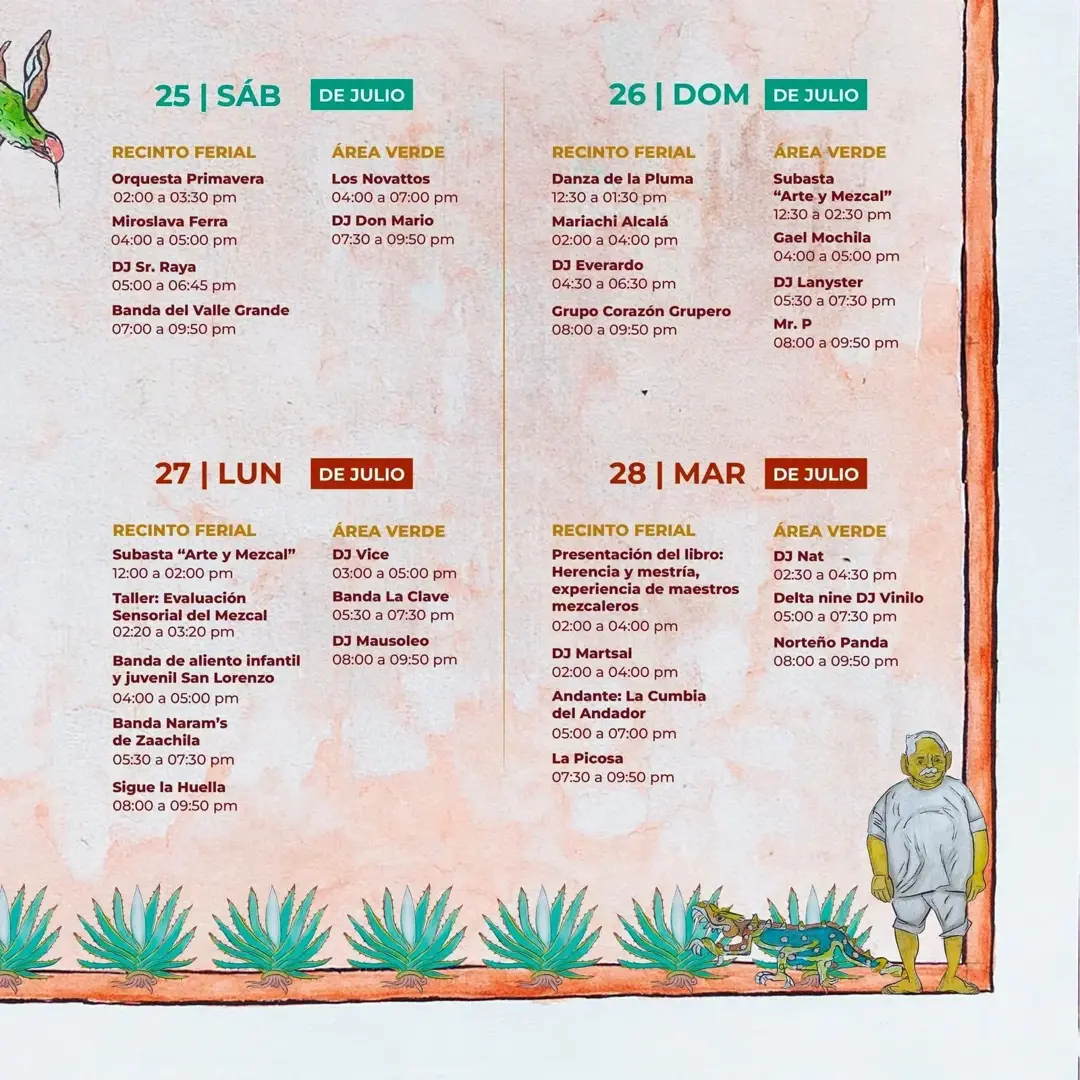
Saturday, July 25
Recinto Ferial- ▸02:00–03:30 pm · Orquesta Primavera
- ▸04:00–05:00 pm · Miroslava Ferra
- ▸05:00–06:45 pm · DJ Sr. Raya
- ▸07:00–09:50 pm · Banda del Valle Grande
- ▸04:00–07:00 pm · Los Novattos
- ▸07:30–09:50 pm · DJ Don Mario
Sunday, July 26
Recinto Ferial- ▸12:30–01:30 pm · Danza de la Pluma (traditional Oaxacan dance)
- ▸02:00–04:00 pm · Mariachi Alcalá
- ▸04:30–06:30 pm · DJ Everardo
- ▸08:00–09:50 pm · Grupo Corazón Grupero
- ▸12:30–02:30 pm · "Arte y Mezcal" Auction
- ▸04:00–05:00 pm · Gael Mochila
- ▸05:30–07:30 pm · DJ Lanyster
- ▸08:00–09:50 pm · Mr. P
Monday, July 27
Recinto Ferial- ▸12:00–02:00 pm · "Arte y Mezcal" Auction
- ▸02:30–03:20 pm · Workshop: Mezcal Sensory Evaluation
- ▸04:00–05:00 pm · Banda de Aliento Infantil y Juvenil San Lorenzo
- ▸05:30–07:30 pm · Banda Naram's de Zaachila
- ▸08:00–09:50 pm · Sigue la Huella
- ▸03:00–05:00 pm · DJ Vice
- ▸05:30–07:30 pm · Banda La Clave
- ▸08:00–09:50 pm · DJ Mausoleo
Tuesday, July 28 — Last Day
Recinto Ferial- ▸12:00–01:30 pm · Book presentation: Herencia y maestría, experiencia de maestros mezcaleros (Heritage and mastery: the experience of mezcal masters)
- ▸02:00–04:00 pm · DJ Martsal
- ▸05:00–07:00 pm · Andante: La Cumbia del Andador
- ▸07:30–09:50 pm · La Picosa
- ▸02:30–04:30 pm · DJ Nat
- ▸05:00–07:30 pm · Delta Nine DJ Vinilo
- ▸08:00–09:50 pm · Norteño Panda
Survival Guide and Mezcal Etiquette
If you've never been to a spirits fair this size, the sheer number of options will overwhelm you in the first ten minutes. Follow these rules so you don't end up dizzy by 1:00 pm:
1. Tastings are not free "shots"
Producers will offer you a small sip (sometimes literally a quarter of an ounce) in a veladora glass. The purpose of this sample is for you to evaluate the flavor and aromas, and decide if you want to buy the bottle. It is not an open bar. Sip it slowly ("a besos", like giving it little kisses), savor it, and if you're not buying, say thank you and move on. Asking for "another little bit just to be sure" when you clearly aren't buying is considered very rude.2. Start with Espadín, end with Wild Agaves
If you're not very experienced, don't start by tasting a 50% ABV Tepeztate. The Espadín agave is the backbone of Oaxacan mezcal: it's smooth, balanced, and the best way to understand the master mezcalero's style. Once your palate is calibrated, move on to ensambles (agave blends) or wild agaves like Tobalá, Cuixe, or Madrecuixe, which have more mineral, herbal, or earthy profiles.3. "Lining your stomach" is mandatory
Never arrive on an empty stomach. The fair opens at 11:00 am. If you start tasting mezcal at noon without eating, your fair experience will end abruptly at 2:00 pm in the worst possible way. Go straight to the food zone, order a tlayuda or some tasajo tacos, and then begin your tasting tour.4. Ask, ask, ask
The best part of the fair isn't drinking; it's talking to the people who make it. The master mezcalero or their family is usually behind the stand. Ask them what region they're from (mezcal from Sola de Vega tastes very different from Matatlán), what kind of oven they use, or how long that specific agave took to mature. They love talking about their craft.☕ Is this guide coming in handy? Buy me a coffee — it keeps this running (and feeds my cats).
The Local's Secret: The Last Day (July 28)
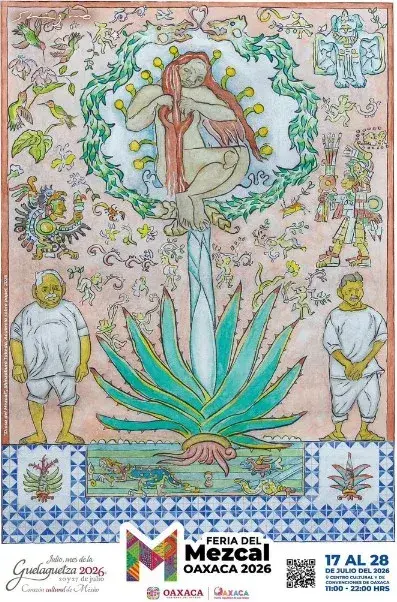
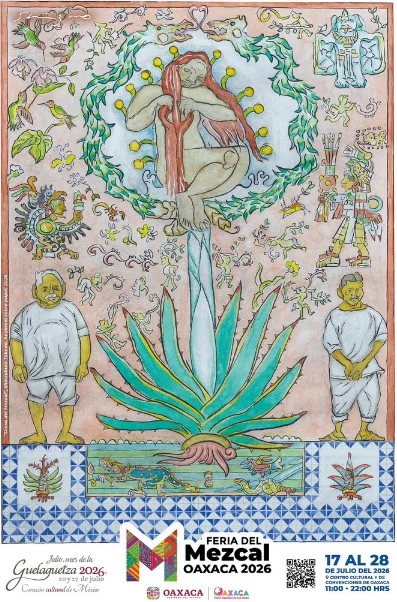
The official FAIM 2026 artwork is by master artist Shinzaburo Takeda, titled "Diosa del Mezcal" (Goddess of Mezcal). The watercolor piece draws inspiration from the legend of Yaa Nduva, the Zapotec deity of mezcal — a reminder that this drink carries centuries of history before any trend.
If you want the best atmosphere and the best deals, go on July 28.
Why? Due to organizing committee rules, exhibitors are forbidden from removing bottles from the venue that have already been opened for tasting. Plus, packing up and doing inventory on leftover product is a hassle. The result? Starting around 6:00 pm on the last day, prices drop.
Many producers liquidate their remaining inventory and sell the exhibition bottles (sometimes half full, or nearly empty) at ridiculously low prices. Also, the closing musical act is always the most festive, with the best bands playing until the end. If you can only go one day, and you want to buy bottles, make it this one.
Taking a piece of Oaxaca home with you? Our little shop has curated crafts and merch — what you buy keeps this guide free.
Is it worth going?
Absolutely. Even if you don't drink alcohol, the atmosphere is festive, the food is excellent, and the artisan pavilion has pieces that are sometimes hard to find in the city center. Final Tip: Bring cash. While many stands now accept cards or transfers, the cellular network inside the CCO sometimes gets saturated due to the crowd, causing payment terminals to fail. Nothing breaks the heart more than finding the perfect Tobalá and not being able to pay for it because your card won't go through.See you at the CCO! If you found this guide helpful, share it, and if you see us around the fair, buy us a mezcal!
More guides you might find useful
- ▸Things to Do in Oaxaca: A Guide from Someone Who Lives Here
- ▸Guelaguetza 2026: Complete Guide
- ▸Noche de Rábanos: Complete Guide
- ▸Oaxaca Transport Guide
- ▸Safety in Oaxaca: Guide for Travelers
Have questions? Join our Facebook community.
This article contains affiliate links. If you book or hire through them, I earn a small commission at no extra cost to you. Thanks for supporting Qué Onda Oaxaca.
Was this guide helpful?
This is an independent project — no algorithms, no VC money, just research, boots on the ground, and a genuine love for Oaxaca. If this guide saved you time, a headache, or just came in handy, consider supporting the project with a coffee. It goes directly here. ☕ Buy me a coffee