Updated: July 2026 | Reading time: 18 minutes
The Reality of Oaxaca: No Filter, But With Love
Let's start at the end: yes, Oaxaca is worth every peso, every kilometer and every ounce of risk involved in getting here. That's not in question.
But if you're looking for someone to tell you Oaxaca is completely safe, that nothing happens here, that it's all mole negro and street food under an eternal sun — this isn't your article. Those exist. They're called hotel brochures.
This Oaxaca safety guide is written for the traveler who prefers to know what they're getting into. Because real information doesn't scare tourists away — it protects them.
Oaxaca is not your country. Adapt.
Oaxaca is extraordinary. It has one of the most complex food cultures in the world, an artisan tradition that genuinely blows minds, colonial architecture that aches with beauty, and mountain villages where time works differently. That's all real.
Also real: the state has its own rhythm, its own unwritten rules, and its own chaos — a chaos that functions, but that requires visitors to adapt to it. Not the other way around.
Traffic will not stop because you come from a country where pedestrians have the right of way. Sidewalks will have unmarked potholes. The May heat will not negotiate. And locals will keep speaking Zapotec between themselves — and that's not a personal affront.
The best tool you can bring to Oaxaca isn't an app. It's humility and common sense.
"Don't do things that give excuses"
There's a phrase that Oaxacans use that pretty much sums up the philosophy of moving through this place without drama: "No hagas cosas para dar excusas" — don't do things that give anyone an excuse to mess with you.
It doesn't mean living in fear. It means: be aware of your surroundings, don't create unnecessary openings, don't call attention to yourself in ways you don't want.
Same logic that says don't flash your Rolex in a rough neighborhood — not because the neighborhood is hell, but because you're reading the context wrong.
The shift nobody explains: post-pandemic and gentrification
Ten years ago, there was an unspoken understanding: foreign tourists weren't touched. Not because Oaxaca was crime-free, but because the social dynamics worked that way — and honestly, because tourists weren't walking around with as much visible wealth.
That changed.
The post-pandemic tourism boom turned the Historic Center into something resembling a walking luxury goods market. Today, on a Saturday afternoon on Alcalá street, you'll find tourists carrying $2,000 mirrorless cameras, AirPods, iPhone 16 Pros, and backpacks that cost more than a local worker makes in a month.
A thief doesn't see a passport. They see an opportunity.
This isn't a moral judgment about who spends what — it's a data point about how the perception of the foreign tourist has shifted in the eyes of common crime. And it's worth keeping in mind.
Is Oaxaca "One of Mexico's Safest States"? The Numbers Debate
The state government — through SECTUR — has repeatedly declared that Oaxaca ranks as the fifth safest state in Mexico. Sounds great on a Facebook post. Reality has more texture.
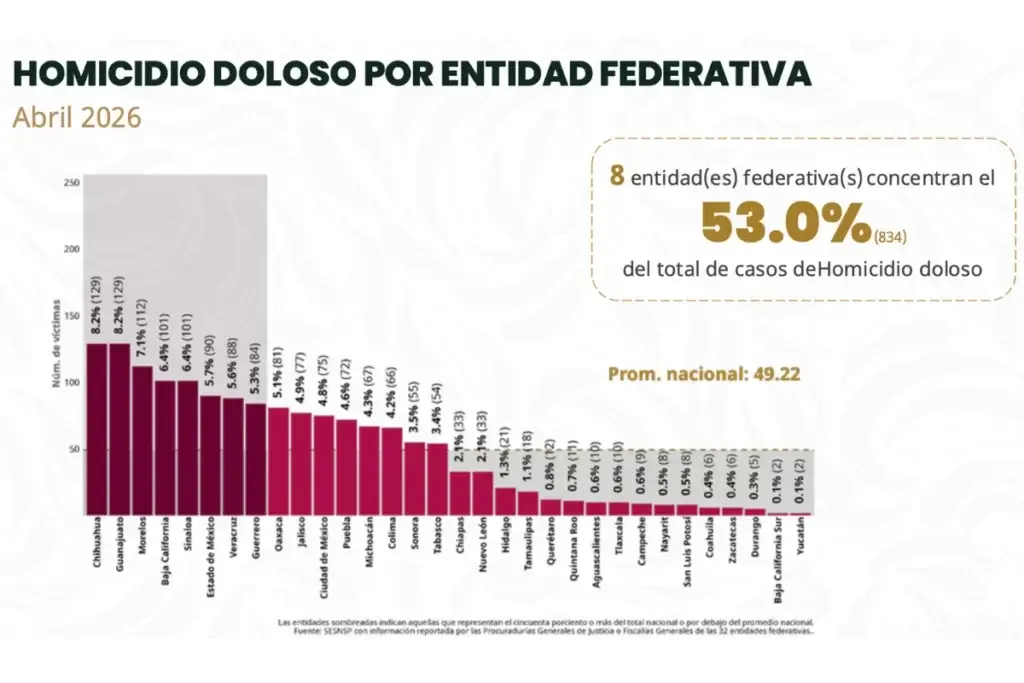
The political fact-checking outlet GrupoAnimal analyzed the claim in 2026 and rated it misleading. The hard data:
- ▸In April 2026, Oaxaca ranked #9 nationally in intentional homicides, with 81 deaths that month.
- ▸In the first four months of 2026, homicides in the state increased 14.3%: from 272 to 311 victims.
- ▸According to ENVIPE 2025 (Mexico's national victimization survey), 70.9% of adult Oaxacans feel unsafe in their state.
- ▸Oaxaca City ranks 49th out of 91 urban areas in the country for perceived insecurity, with 70.5% of residents feeling unsafe.
- ▸The Mexico Peace Index 2025 places the state at #13 nationally, rated "yellow" (medium risk) — nowhere near the top 5.
So is the government lying?
Not exactly. On certain specific indicators, compared to states like Guerrero, Colima, Tamaulipas, or Guanajuato, Oaxaca does rank better. The "fifth safest" claim might be accurate in one specific metric, in one specific period.
The problem is using that as a general portrait of the state. It's like saying a hospital is "one of the best in the country" because it has low parking violation rates.
The honest read
Oaxaca is not the Breaking Bad collapse. But it's not Switzerland with tamales either. It's a developing state with real structural inequality, real dynamics of violence, and a perception of insecurity that the local population itself confirms.
For the tourist, what matters isn't the state ranking — it's understanding what specific risks exist in the places they'll actually visit, and how to mitigate them. That's what the rest of this guide is for.
Traffic Culture and Pedestrians: The Water Tanker Case
There's something few travel guides warn you about because it sounds uncomfortable to say: walking around Oaxaca requires constant attention, not because there's a criminal on every corner, but because the driving culture here is, to put it affectionately, institutionalized chaos.
"Cafres" — reckless drivers who don't respect signals, traffic lights, or pedestrians — are part of the Oaxacan traffic ecosystem. Not all drivers. Not always. But enough that you need to keep your eyes open.
The water tanker incident
In recent years, the death of a foreign woman hit by a water tanker truck in the middle of the Historic Center sparked an intense debate in the city. The debate wasn't about whether the victim was at fault — she wasn't, the driver was, that was clear. The debate was about something deeper: in Mexico, being right and being alive don't always go together when traffic is involved.
There's a popular phrase here that sounds funny until you understand it: "Before crossing the street, look both ways in case some ahole comes flying through." It exists for a reason.
The pedestrian is never at fault. But that doesn't protect the pedestrian.
Concrete tips for walking in Oaxaca
- ▸Only cross at marked intersections or traffic lights — and even then, wait for the vehicle to actually stop before stepping out.
- ▸Watch for common blind spots: water tankers, urban buses, mototaxis, cyclists going the wrong way, and cars running red lights.
- ▸No headphones at full volume while walking — you need to hear what's coming.
- ▸Sidewalks are an obstacle course in themselves: potholes, uneven curbs, poles in the middle of the walkway. Watch where you step, especially at night.
- ▸At malls and the Periférico: vehicular speeds increase significantly outside the Historic Center. Extra caution when crossing in these areas.
Safety in Oaxaca City: Historic Center and Surroundings
Common crime: what's actually happening
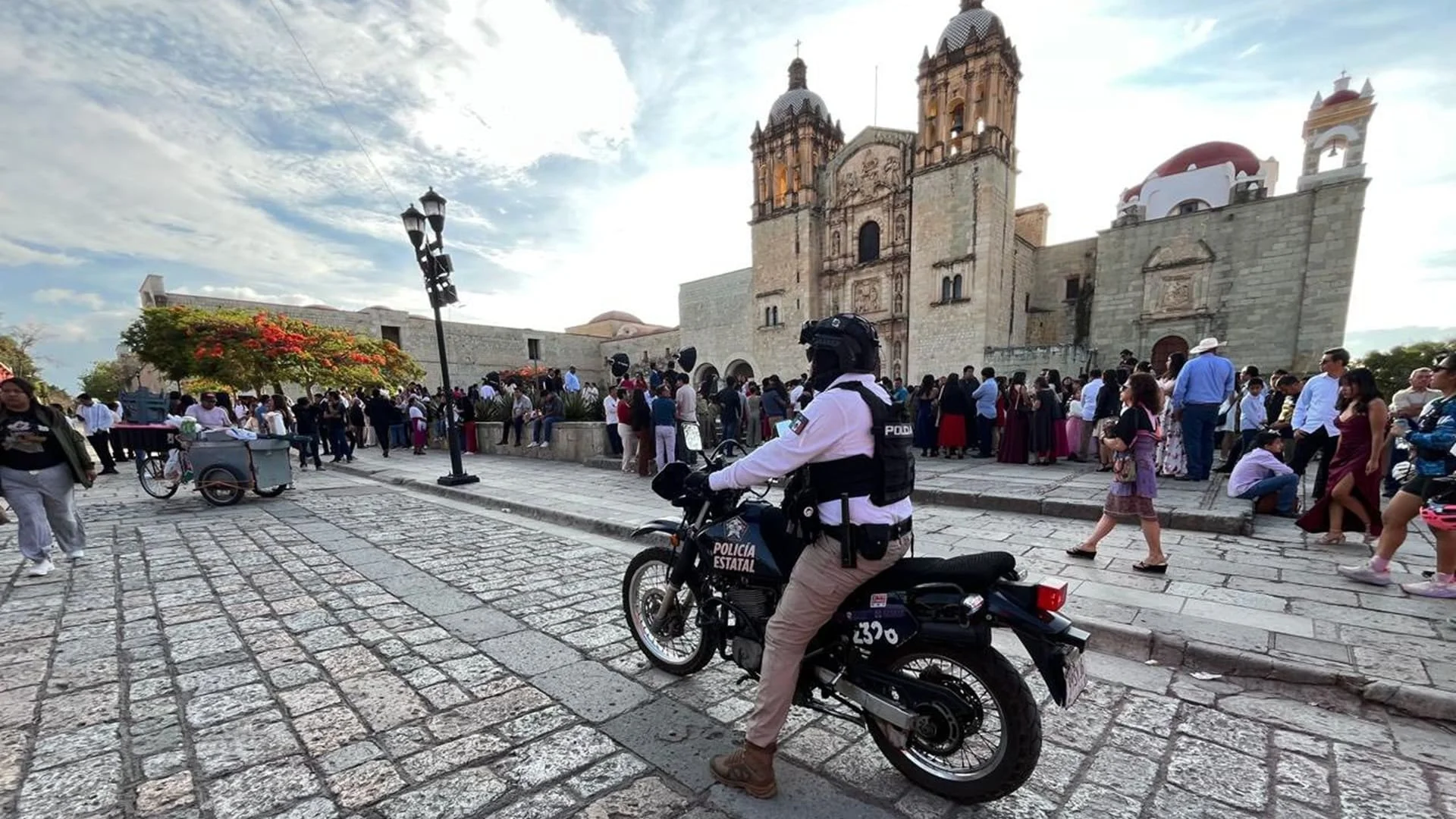
The uptick in armed robberies in Oaxaca started in spring 2021 and hasn't fully subsided. Muggings happen in the Historic Center, including in the afternoon in busy areas — they're no longer just a late-night phenomenon.
The most common patterns:
- ▸Phone snatching mid-walk. Motorcycles are the preferred vehicle for this. You're walking, phone in hand, and in two seconds a motorcycle passenger grabbed it and they're gone. Happens on Alcalá, in the market, on 20 de Noviembre, and especially around the aqueduct in the Xochimilco neighborhood — though with decreasing frequency in that area.
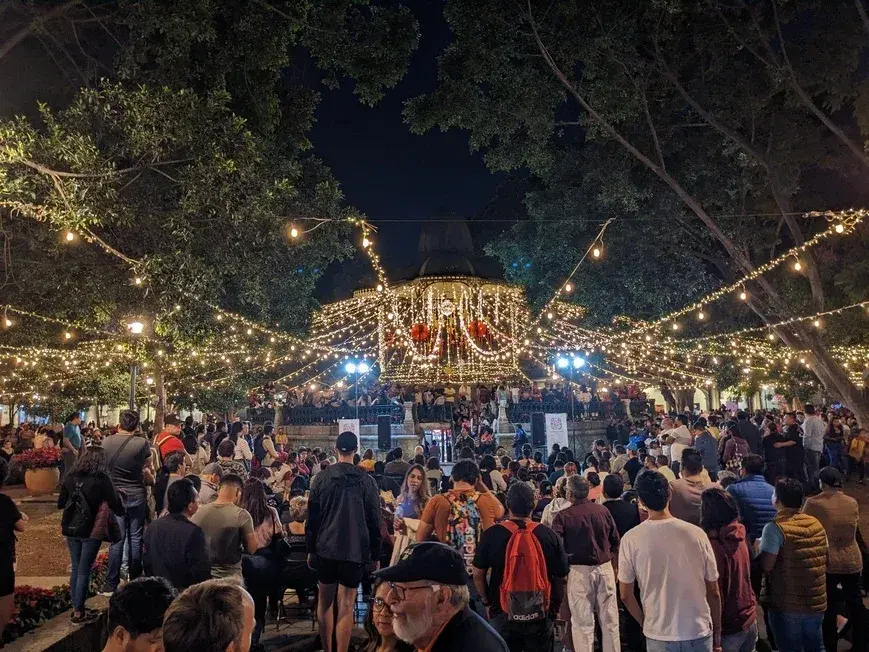
- ▸Pickpockets in high-density zones. Benito Juárez Market, the Zócalo during mass events (Guelaguetza, Night of the Dead), crowded public transit. During convites and calendas processions it's widely known that bag slashing happens — tote bags are a particularly easy target — so hold your things close.
- ▸Armed robbery on secondary streets. Especially around the market area after 10 PM, and on certain streets between the Center and Jalatlaco neighborhood after midnight.
Practical urban safety tips
With your phone: Don't take it out if you don't need it. If you have to use it, find a wall behind you so you have no exposed flank. Don't walk around staring at the screen. At night: After midnight, the rule is simple: don't walk. The city doesn't turn into a war zone, but the risk-benefit ratio doesn't justify saving on a taxi. Transportation in Oaxaca is cheap. Your life isn't. With ATMs: Use them during the day, inside banks or shopping malls (Chedraui, City Market). Never street machines at night, alone. Quieter zones: Historic Center (with awareness), Jalatlaco (very walkable, good lighting), Reforma/Noria, Xochimilco. Avoid the market surroundings at night and unlit streets south of the Center.Transportation and alcohol: the combination that creates the most victims
If you're going out at night and plan to drink — which is perfectly valid and enjoyable — measure your consumption and plan your way home before you start drinking.
Cases have circulated, among both locals and tourists, of people who got into a taxi unconscious and woke up without their belongings. This is not urban legend — it's happened to people we know. The only cure is making decisions before the first drink, not the fifth. The basic rules for nighttime transportation:
- ▸Tell someone where you're going, with whom, and in what transport.
- ▸Take a photo of the taxi's plates or send the vehicle info to someone you trust.
- ▸Use DiDi — it's the ride-sharing app that operates in Oaxaca (Uber doesn't have coverage here). The trip is logged, you have the driver's data, and you can share your route in real time.
- ▸There's a newer local option worth watching: Taxsi - Movilidad para Oaxaca, an app designed to regulate pricing so drivers can't run up the fare — we haven't personally reviewed it yet but it looks promising.
- ▸Don't get into white taxis (they have numerous complaints on record) or unmarked vehicles that approach you on the street offering rides.
If you're robbed: the golden rule
If someone robs you: do not resist.
It feels terrible. It's infuriating. But common criminals operating in tourist zones want the object, not the confrontation. Resistance is what turns a robbery into something worse.
Hand over what they ask for. Stay still. Let them leave.
Afterward: file a report at the nearest Ministerio Público (public prosecutor's office). The process can be slow and frustrating, but the record helps local statistics and in many cases is required for travel insurance claims.
Emergency number in Oaxaca: 911.
Roadblocks and social protests: the chaos that's not against you
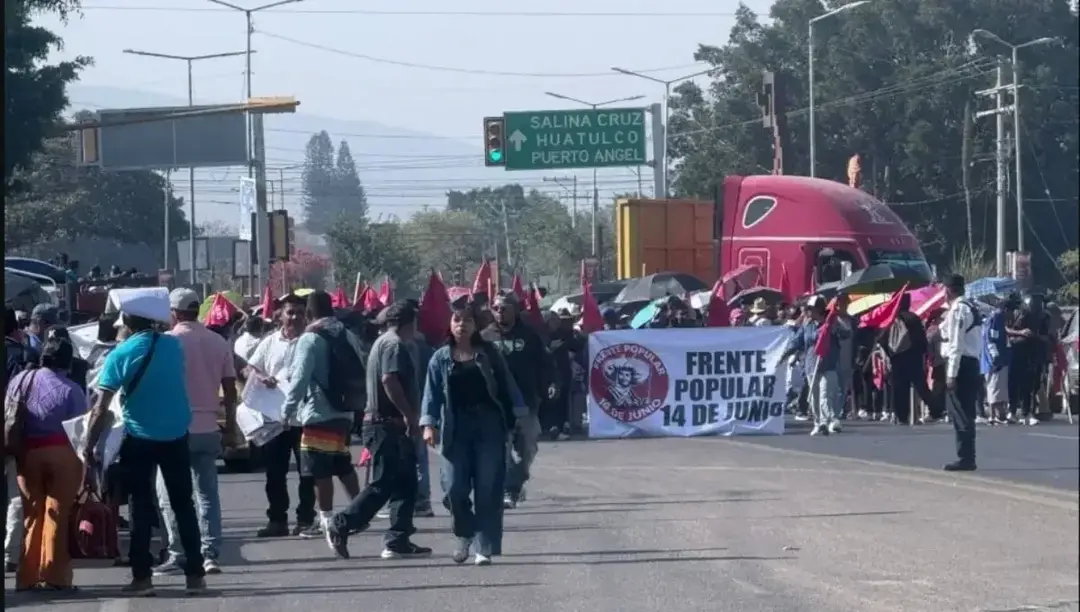
What you need to understand:
- ▸These are not violent events targeting tourists. They are political expression — inconvenient, sometimes very inconvenient, but legitimate within the state's social context.
- ▸They do cause significant logistical delays. If you have a flight, budget double the usual time to reach the airport during periods of tension (end of school term, political anniversaries, union negotiation seasons).
- ▸How to anticipate them: Following local social media accounts before heading out is the best real-time monitoring tool.
The Elephant in the Room: Organized Crime
Let's talk about the topic everyone thinks about but most guides avoid because they're afraid to say it.
Oaxaca is not Sinaloa. It's not Guerrero. It's not Tamaulipas. That's not propaganda — it's a documented fact reflected in the state's violence indicators compared to those regions.
Organized crime operates in the state, yes. It would be naive to deny it. But it operates in a way that could be called discreet — without needing to put on shows that attract massive federal attention or that scare away the goose that lays the golden eggs: tourism.
The average tourist — the one who comes to eat mole in the market, visit Monte Albán, and buy a black clay piece to bring home — rarely comes into contact with this dynamic. And "rarely" here means statistically near-zero probability, as long as the visitor doesn't actively seek out situations that aren't their business. The important exception:
If someone you just met offers a deal that sounds too good to be true, invites you to a zone that's on no tourist map, or proposes some "opportunity" that requires discretion — that's not luck. That's a red flag you should walk away from.
The advice is as simple as it is blunt: don't get involved in what's not your business. Literally.
Oaxaca's Coast, the Isthmus, and Beach Destinations: What Nobody Tells You
Puerto Escondido, Zipolite, Mazunte, and Huatulco
Oaxaca's coastal destinations are among the most beautiful in Mexico and, in general, are safe and perfectly visitable. But "in general" requires nuance. Huatulco is the most institutionalized destination: protected bays, solid tourist infrastructure, more visible security presence. It's the one that generates the fewest unpleasant surprises. Puerto Escondido exploded post-pandemic. What was a moderately known surfer town became one of the country's fastest-growing destinations. That brought more offerings, more services — and also more social tensions in areas adjacent to the tourist core. La Punta, Zicatela, and the Center are safe. The peripheral neighborhoods, especially at night, are a different story. Zipolite and Mazunte maintain a quieter, more rural atmosphere. They're small, everything moves on foot or by mototaxi, and the local community is part of the informal safety fabric. Visitable without drama — but with the same awareness as always.
The Isthmus of Tehuantepec: Necessary Context
The Isthmus is a culturally fascinating region — Isthmus Zapotec women are a world unto themselves — but it has its own safety dynamics that differ from Oaxaca City.
The Salina Cruz and Tehuantepec area has recorded tensions linked to migrant trafficking and substance routes. In February 2026, there was a documented incident of bus burning in Salina Cruz — a localized event that doesn't represent the general state of the region, but that illustrates that tensions exist.
The Isthmus is perfectly visitable. But doing so alongside someone local who knows the territory — and who knows which neighborhoods to avoid and at what hours — makes a difference that no guide can replicate.
Road Travel in Oaxaca: What You Need to Know
The Oaxaca–Puerto Escondido highway (Hwy 175 through the Sierra Juárez) is one of the most impressive and also most dangerous routes in the state. Consecutive tight curves, frequent fog, landslides during rainy season, and stretches without adequate lighting or signage. Thousands of people travel it without incident — but at night, with rain, or with a driver who doesn't know it well, the odds shift considerably. The golden rule for this route: travel it during the day, without rushing, with someone who knows it.
The Oaxaca–Huatulco highway (Hwy 190/200) has better infrastructure and is considerably safer. If you're heading to Huatulco, this is your route. About military and police checkpoints: these are routine and normal on Oaxacan highways. They slow you down, occasionally ask for ID, check the vehicle. There's no reason to be alarmed — it's standard protocol on federal routes. General recommendation: avoid traveling by road at night in the state unless absolutely necessary.
Cannabis and Police Extortion: The Real Talk
This deserves its own section because it's one of the risks that most affects young tourists on the coast, and almost nobody talks about it openly.
In Mexico, cannabis is decriminalized for personal use. On paper. The reality on the road — especially on the Oaxacan coast — is different.
Carrying cannabis while traveling by bus, in a private vehicle, or walking through non-tourist areas is an invitation to police extortion. Not necessarily because it's strictly illegal, but because certain officers will spot a tourist with a joint and see an unofficial business opportunity.
Without moralizing: if you're going to consume, do it in a private space, with people you trust, where it doesn't disturb anyone and where there's no public exposure. Carrying it in your backpack while traveling by highway or walking through areas outside the tourist corridor is simply an unnecessary risk.
Safety Guide for Women Travelers
We write this section with the seriousness and urgency it deserves.
Oaxaca, like the rest of Mexico, faces a real, documented gender violence crisis that affects both Mexican women and foreign visitors. The 2026 numbers include 5 femicides in the first four months of the year (SESNSP). That's not a footnote — it's the context in which every woman visiting or living here moves. Oaxaca is visitable for women. Alone, in groups, of any orientation and gender expression. Thousands do it every year without incidents. But doing it with information means doing it better.
The threat nobody mentions: drink spiking
Drink spiking — introducing substances into someone's beverage without their knowledge — is a documented reality in Oaxaca's bars and clubs. Not only among foreign tourists: local women and members of expat communities have reported experiencing or witnessing it firsthand.The mechanism is simple, which is why it's effective: someone charming and seemingly harmless puts something in your drink while you're distracted. What follows is disorientation, partial or total loss of consciousness, and total vulnerability. Basic rules that are non-negotiable:
- ▸Never accept drinks from strangers. Doesn't matter how charming they are, what story they tell, what face they make. If you didn't see it being prepared, don't drink it.
- ▸Never leave your drink unattended. If you went to the bathroom and didn't leave it with someone you completely trust — that drink is no longer yours. Order a new one.
- ▸Trust your body. If you suddenly feel dizzy or disoriented in a way that doesn't correspond to what you consumed — activate your group immediately. Don't go anywhere alone.
- ▸Share your location. Before going out at night, activate real-time location sharing with someone you trust. This isn't paranoia — it's protocol.
Where to go out and what to watch for
The areas with the best safety reputation for nightlife in Oaxaca are Jalatlaco, Reforma, and the bar strip along García Vigil and Cinco de Mayo. These are places with more familiar local venues, better references, and more lighting.
Avoid bars or clubs without references, especially if they're far from the tourist corridor or if you don't know anyone there.
Safe transportation for women
Everything that applies to everyone applies more strongly here: DiDi over street taxis, always. The logged trip, the driver's name, and the option to share your route are tools that in a difficult situation can make all the difference.
Conclusion: Come to Oaxaca. But Come With Your Eyes Open.
The purpose of this guide is not to scare you. It's the opposite.
If we wanted to discourage tourism, we wouldn't be writing this. We want you to come. We want you to stay. We want you to eat in the markets, dance at village festivals, buy directly from the artisans, and carry a piece of this city in your memory forever.
But we also want you to do it with the information that we — the people who live here — actually have.
The difference between the tourist who goes home enchanted and the one who goes home with a horror story is, in the vast majority of cases, knowledge and attention. Not luck.
Oaxaca doesn't owe you anything. But it doesn't have to hurt you either — as long as you arrive with respect, with awareness, and without assuming the world pauses because you crossed a border. Oaxacans live here. We eat here. We go out here. We enjoy the same city you're about to visit. All we ask is that you treat it like it belongs to you too — because for the time you're here, it does.
Want more practical guides to moving around Oaxaca like a local? Browse all our guides at queondaoaxaca.com/en/guides.
Versión en español: queondaoaxaca.com/guias
This article contains affiliate links. If you book or hire through them, I earn a small commission at no extra cost to you. Thanks for supporting Qué Onda Oaxaca.
Was this guide helpful?
This is an independent project — no algorithms, no VC money, just research, boots on the ground, and a genuine love for Oaxaca. If this guide saved you time, a headache, or just came in handy, consider supporting the project with a coffee. It goes directly here. ☕ Buy me a coffee