
This article contains affiliate links. If you book or hire through them, I earn a small commission at no extra cost to you. Thanks for supporting Qué Onda Oaxaca.
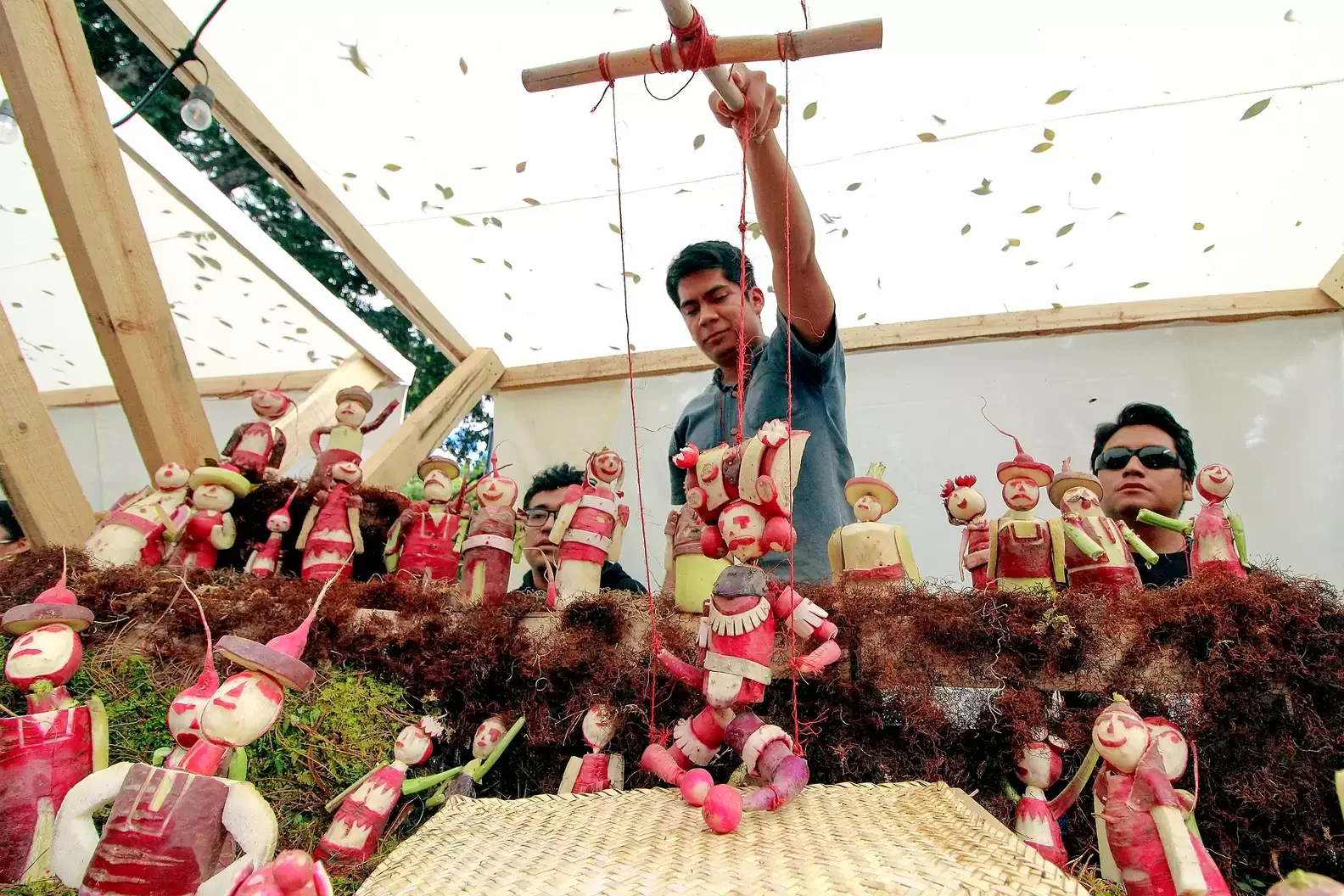
Every December 23rd, the main square of Oaxaca fills with giant radishes carved into Virgins, dancers, street processions, mezcal distillers, nativity scenes, and even wrestlers. It sounds strange when you say it out loud, but the Night of Radishes is one of the city's most beloved December traditions — and, without exaggeration, one of the most remarkable in all of Mexico. Admission is free. The only thing that costs you is the line.
Almost nobody outside Mexico has heard of it. It's like the less famous cousin of Día de Muertos. But here it carries nearly as much weight as Christmas itself. It's been held every year since 1897 — only the pandemic stopped it. The artisans take it seriously: some teams start planning their pieces over a month in advance.
Note: Official times and program for 2026 haven't been published yet. The exhibition is always December 23rd (a Wednesday this year), but the parade schedule, concerts, and activities are announced closer to the date. This guide will be updated as soon as they're out.
The basics of the Night of Radishes 2026
- ▸When: Wednesday, December 23, 2026
- ▸Where: Oaxaca's main square (Zócalo / Plaza de la Constitución), next to the Cathedral
- ▸Cost: free, open admission
- ▸What you'll see: figures carved from giant radishes, scenes made with immortal flower (flor inmortal), and totomoxtle (dried corn husk) sculptures
- ▸When prizes are announced: at night, usually between 7 and 9 pm depending on the year; closes with fireworks
What time to arrive (the question that actually matters)
Straight answer: aim for around 3 in the afternoon. Two reasons.
First: after 5pm the line grows and grows. It wraps around the entire square and moves at a crawl. Waiting an hour to two hours is normal; in packed years, some people have waited five.
Second — and almost nobody tells you this — by late evening many of the exhibitors are exhausted (they've been carving for days without much sleep) and some start removing their most important pieces. Arrive late and you'll have a longer line and see less.
The Night of Radishes is not something you rush. You need time to appreciate the detail and take photos without being pushed along. After dark in the main section of the queue, that becomes impossible.
A useful trick: the line is only for the roped-off aisle right next to the exhibition stands. If you just want a general impression, you can walk the perimeter outside the barriers without queuing — you'll see the pieces from a distance, over other people's heads. Also: elderly visitors are sometimes allowed to pass ahead; if you're going with a grandparent, ask the organizers politely.
My perfect plan (and why not to bring beer)
My plan this year: arrive with friends around 5pm — right for golden hour. There will be a line, but not the hell-line of 7 or 8pm. I'll see everything, take photos in the best light, and by the time I leave it's dark and the city is in full December mode.
Before queuing, we have one mezcal somewhere in the center. One. To make the wait more pleasant and get into the spirit.
Honest advice: because entry is sometimes unsupervised, some people try to sneak in a beer. Don't. Beyond the fact that a police officer might stop you, a beer means a desperate need for a bathroom about halfway through a two-hour line. It's a terrible trade. One mezcal beforehand, and bring water.
The payoff of this timing: the whole evening is free after. Go to a concert, crash a posada, have a ponche, or just stay around the Zócalo — it always has things happening in December.
The bathroom situation (read this, seriously)
There are bathrooms under the Zócalo's central gazebo (kiosco). Expect a long line.
The restaurants in the portales almost never let you in that night, even if you offer to buy something. The places that never disappoint: the public bathrooms outside Hotel El Trébol (outside, not inside).
Use the bathroom before getting in line. I mean it.
How to take good photos at the Night of Radishes
- ▸Best light: golden hour, roughly 5–6pm in December. Go early.
- ▸At night, the pieces look beautiful lit up, but turn off your flash — it glares horribly off the wet radish surface.
- ▸Water droplets: artisans spray their pieces constantly to prevent wilting. Those drops look incredible in close-up shots.
- ▸Look for the details: carved faces, shawls sculpted from the red skin alone, dancers' tiny hands. Everyone has the wide-angle group shots.
- ▸Leave the tripod at home. There's no room in the line.
- ▸Be respectful: don't touch the pieces, don't push for a photo, don't block kids.
- ▸Ask permission before photographing an artisan up close. Almost all of them will tell you exactly what they made and why.
Taking a piece of Oaxaca home? Our little shop has locally-sourced artisan pieces — what you buy there goes directly to the maker and keeps our cultural calendar free. Browse the shop →
What's in the contest
The competition is organized by the Municipality of Oaxaca. Horticulturalists, florists, and artisans from across the state take part — many of them families who've been doing this for generations. Only people from Oaxaca can enter.
Traditional radish. Scenes from Oaxacan life: regional occupations, traditional dress, nativity scenes, Three Kings, the Virgen de la Soledad, Día de Muertos, the Guelaguetza.
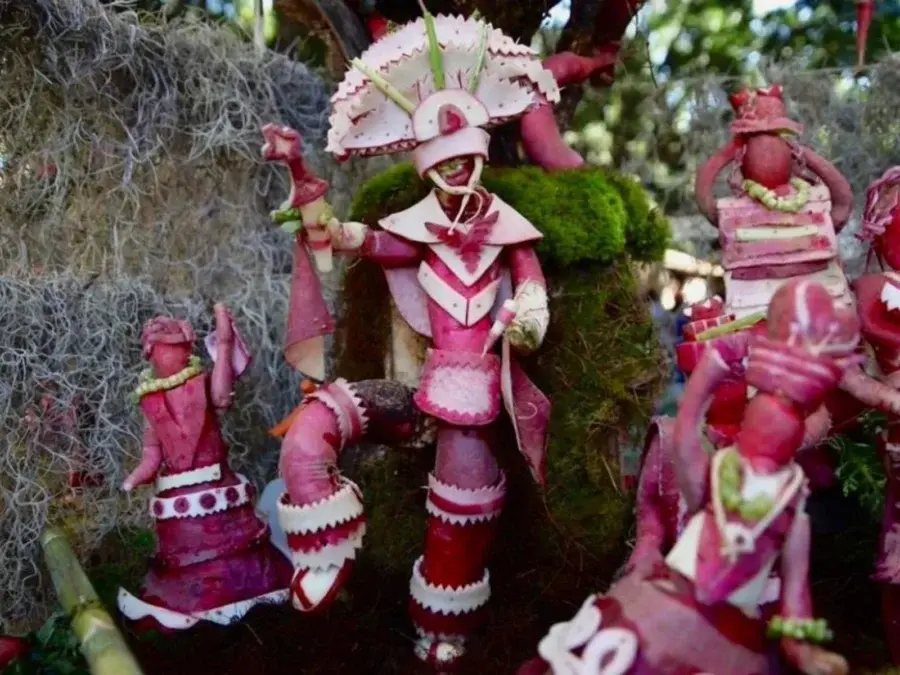
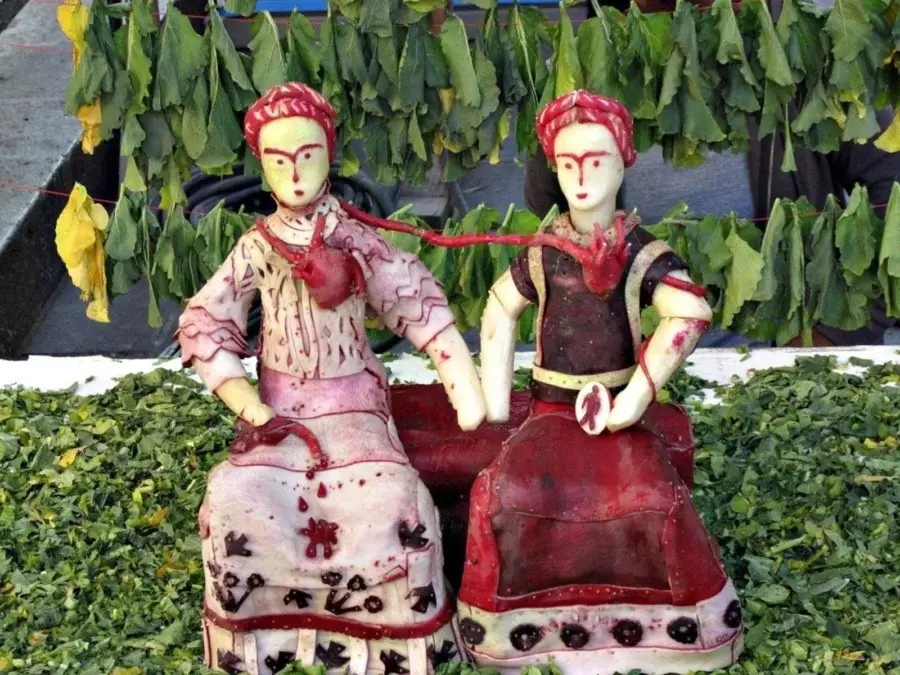
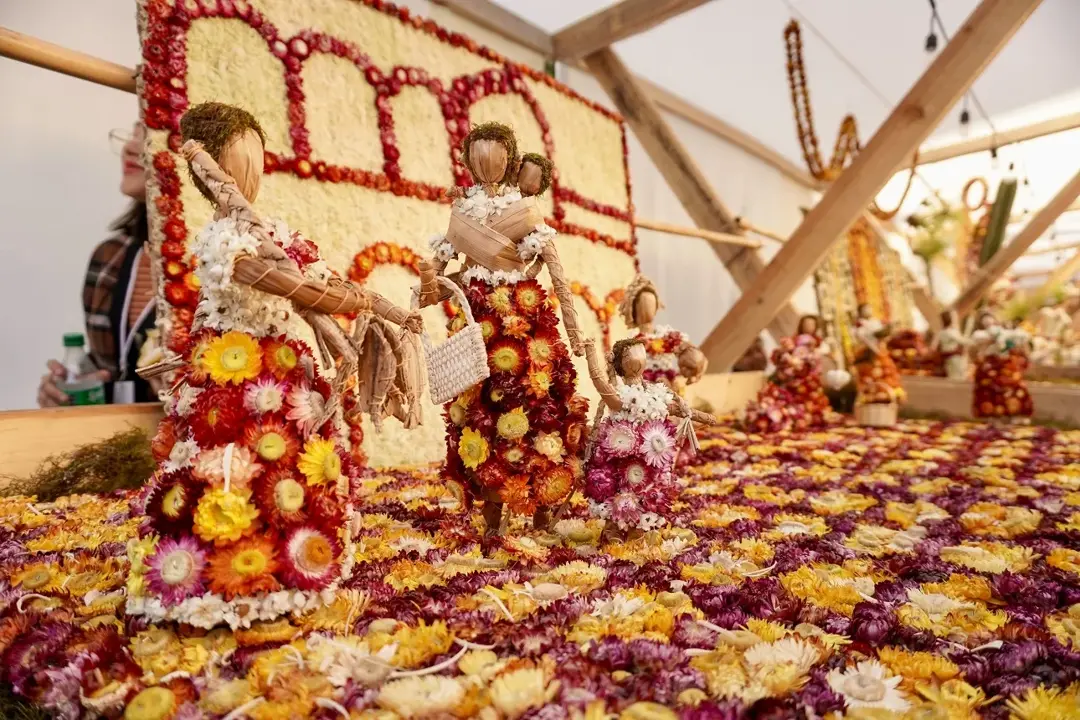
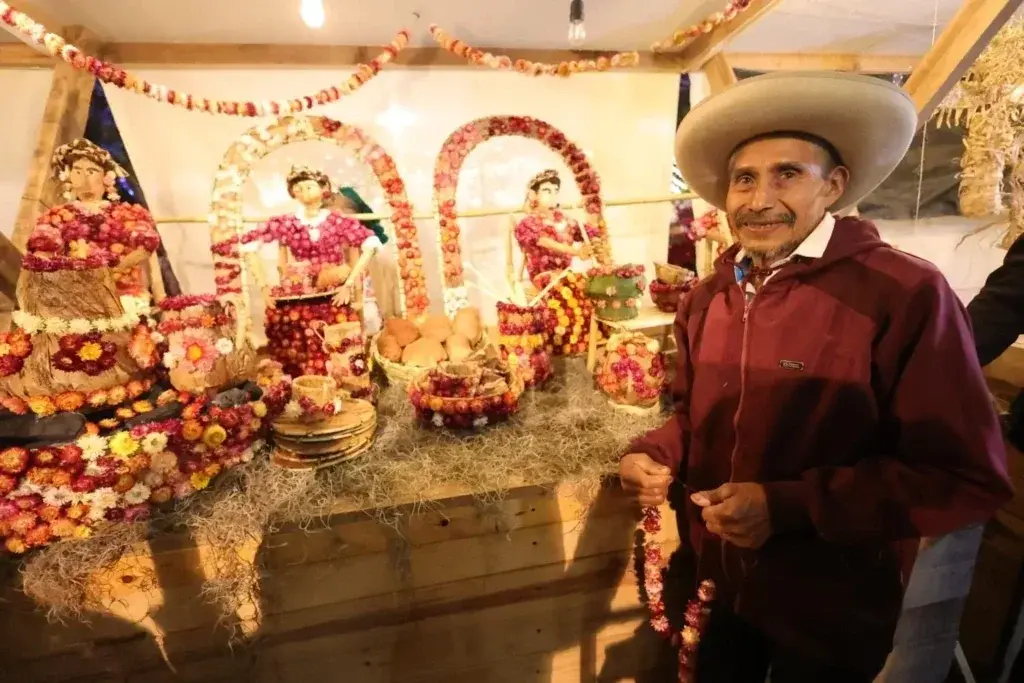
The rules are strict: no ink dyes, no metal, no plastic; only wooden toothpicks to join pieces, and most of the display must be radish. The jury — which includes former champions — judges aesthetics, creativity, and technique, and inspects for synthetic materials. Each category awards three cash prizes.
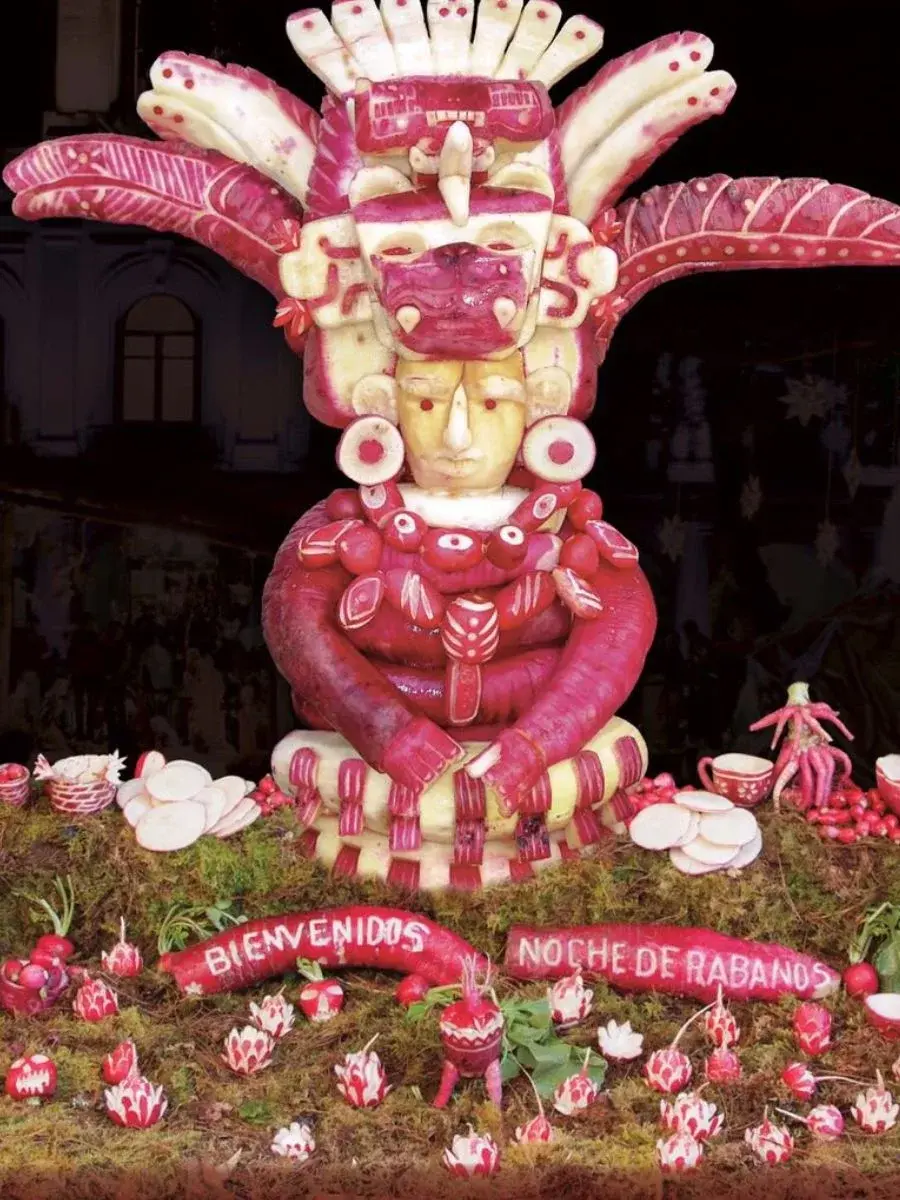
There are legends. Juan Manuel García Esperanza won first place 18 years in a row and is known locally as the Señor de los Rábanos. Even so, most artisans say the same thing: the best prize is when people slow down to actually look at what they made. Another reason not to rush past.
☕ Was this guide helpful? I write it from Atzompa, with no editorial sponsors. If it saves you time or stress, buy me a mezcal — it keeps this project going.
Where the giant radishes actually come from
They're not bought at the market. Growing to that size takes enormous amounts of water and fertilizer, so the municipality grows them itself. The symbolic planting happens between late September and early October at El Tequio park, in Santa Cruz Xoxocotlán, in a ceremony with city officials.
All the radishes come from the same plot and are distributed free among registered participants — so nobody has an advantage. They grow for about three months, can reach half a meter in length, and weigh up to 3 kilos, with twisted shapes that artisans use to their advantage.

They're harvested around December 19th — in a recent year, about 18 tons were distributed. Then comes one day of washing and two days of intense carving, often with little sleep. On the 23rd itself, artisans are at the Zócalo from 5am setting up and spraying their pieces, and they stay until the judges announce the winners. By the following day the radishes have already started to wilt — that's why the Night of Radishes is, literally, one-night art.
A little history: 125 years of radishes in the Zócalo
Before Christmas dinner existed as we know it, Oaxacans went to calendas and midnight Mass. On December 23rd, a vigil market would fill the main square with dried fish, vegetables, flowers, and fruit for Christmas Eve.
The horticulturalists of Trinidad de las Huertas — a neighborhood founded in the 16th century by Zapotec and Mixtec Indigenous people who farmed the land — would bring their produce. To attract attention, they started carving radishes into figures. Women would buy them to decorate the table, and the custom grew.
In 1897, Mayor Francisco Vasconcelos Flores organized the first official competition in the square. It's been held every year since — with one gap: the pandemic, when a smaller version was organized in Ocotlán rather than let the date pass. The tradition is now over 125 years old.
The city grew, the orchards along the Atoyac River disappeared, and the radishes are now grown officially. The vegetable gardener became a radish artisan, but the tradition stays in the hands of families passing their techniques down through generations.
Before the Night: the December 22nd parade
The day before, December 22nd, there's a convite (pre-celebration parade) through the historic center: parade floats, brass bands, mojigangas (giant puppet figures), and radish sculptures. Free, very family-friendly, and a good reason to arrive in Oaxaca a day early. The route and timing are announced each year.
If there are bleachers or improvised structures along the parade route, don't climb anything that looks overloaded or makeshift.
Beyond the radishes
Around the Zócalo there's a fair: food stalls, nieves (sorbets), regional sweets, and the famous buñuelos with honey — served in a clay plate that, by tradition, is broken at the end to make a wish. Find a safe corner to break yours; don't throw it at anyone.
When the fireworks are over, don't leave immediately. Walk the streets around the Zócalo: there are piñatas, food stalls, music, and corners most people miss by leaving in a rush. The party goes well into the night.
What to wear and a quick checklist
Dress: hat and sunscreen for the afternoon (the sun is strong even in December), jacket for the evening (Oaxaca gets cool at night in December), comfortable shoes. Wear your backpack on your front and keep your wallet in a front pocket — there will be a lot of people. Quick checklist:- ▸Arrive between 3 and 5pm
- ▸Use the bathroom before queuing (El Trébol, outside)
- ▸Water yes, beer no
- ▸Phone or camera charged
- ▸Sunscreen for the afternoon, jacket for the night
- ▸Patience — this is a night to enjoy without rushing
Can you buy the radish sculptures?
Sometimes yes. Some exhibitors sell their pieces after the judging, especially the flor inmortal and totomoxtle ones, which last much longer. Radish sculptures wilt within a few days and can't be eaten (they're specialty varieties). If you're interested in a piece, ask the artisan respectfully after the jury has passed.
Continue your Oaxaca December plans
The Night of Radishes is only the beginning. For everything else to do in the city — markets, museums, mezcal, day trips — see our complete Oaxaca guide. And if you're coming for Día de Muertos before December, don't miss the Día de Muertos in Oaxaca guide.
For concerts, posadas, and what's happening this week, check the Oaxaca events calendar.