

Cargando…
Cargando…
No favorites in Oaxaca yet.
Tap the heart on any event to save it.
July 17–28 · Centro Cultural y de Convenciones de Oaxaca
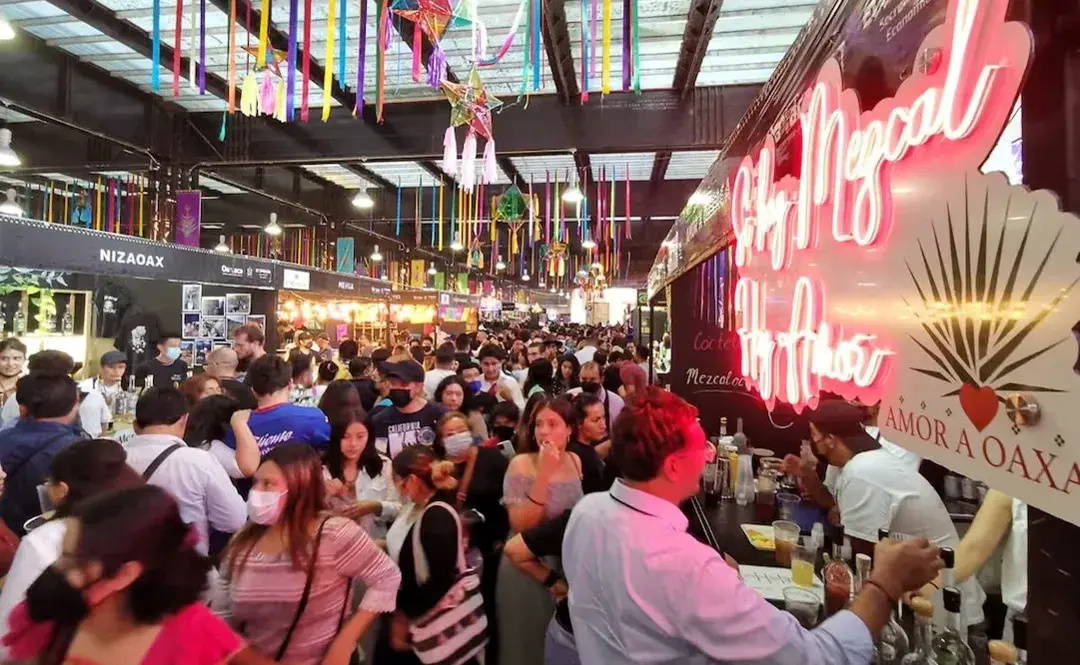
The Feria Internacional del Mezcal (FAIM) is Mexico's most important mezcal event. For eleven days, the CCO in Santa Lucía del Camino concentrates over 100 certified producers from across Mexico alongside 200+ artisans, Oaxacan gastronomy, craft beer and live music — all during the same weeks as the Guelaguetza.
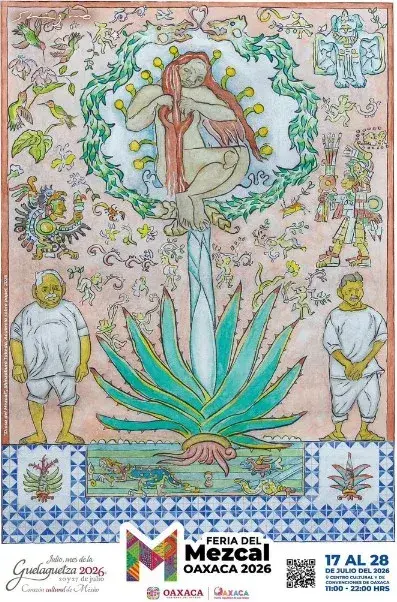
A common point of confusion: the FAIM 2026 is not at the Ethnobotanical Garden. The venue is the Centro Cultural y de Convenciones de Oaxaca (CCO), a large convention center in the adjoining municipality of Santa Lucía del Camino — roughly a 15-minute walk east of the historic center.
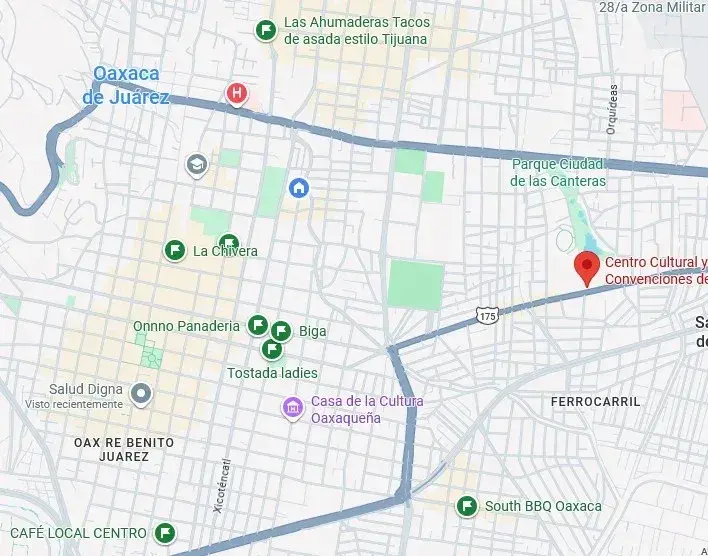
BinniBus (recommended)
The state government runs special routes connecting key points in the historic center to the CCO during the fair. Affordable and avoids parking headaches.
Taxi
Roughly $70–100 MXN from downtown. Good option for groups. Expect traffic during Guelaguetza weeks.
Walking (~15 min)
A direct pedestrian route from the historic center. Many locals prefer it over sitting in July traffic. Flat, straightforward walk.
Note: on busy days (weekends, July 28 closing), Civil Protection may temporarily close ticket booths when capacity is reached. Arrive before 14:00 or after 18:00 for smoother entry.
The fair is bigger than the name suggests. The CCO hosts six distinct areas — mezcal is the main event but far from the only reason to stay all afternoon.
| Area | Exhibitors | What you'll find |
|---|---|---|
| Mezcal Pavilion | 100–106 companies | Certified mezcals with official SHCP tax seal |
| Artisan Section | 208 artisans | Black clay (Coyotepec), alebrijes (San Martín Tilcajete), textiles |
| Agro-industrial Pavilion | 24 producers | Maguey derivatives, traditional salsas, jams |
| Gastronomy | 20 stands | Tlayudas, moles, memelas, traditional Oaxacan antojitos |
| Craft Beer Area | 16 breweries | Outdoor section with a dedicated live music stage |
| Coffee & Beverages | 14 brands | Pluma Hidalgo specialty coffee, regional chocolate |
The producers at the Mezcal Pavilion are ready to explain their mezcal — where it comes from, what agave variety they used, and what makes their process different. Don't hesitate to ask. That's exactly what they want. Most of them speak about their work with the same pride a winemaker has for their terroir.
 Editorial Guide12 min read
100+ certified producers, agave varieties explained, how to taste, logistics and what makes this fair different from any other mezcal event.
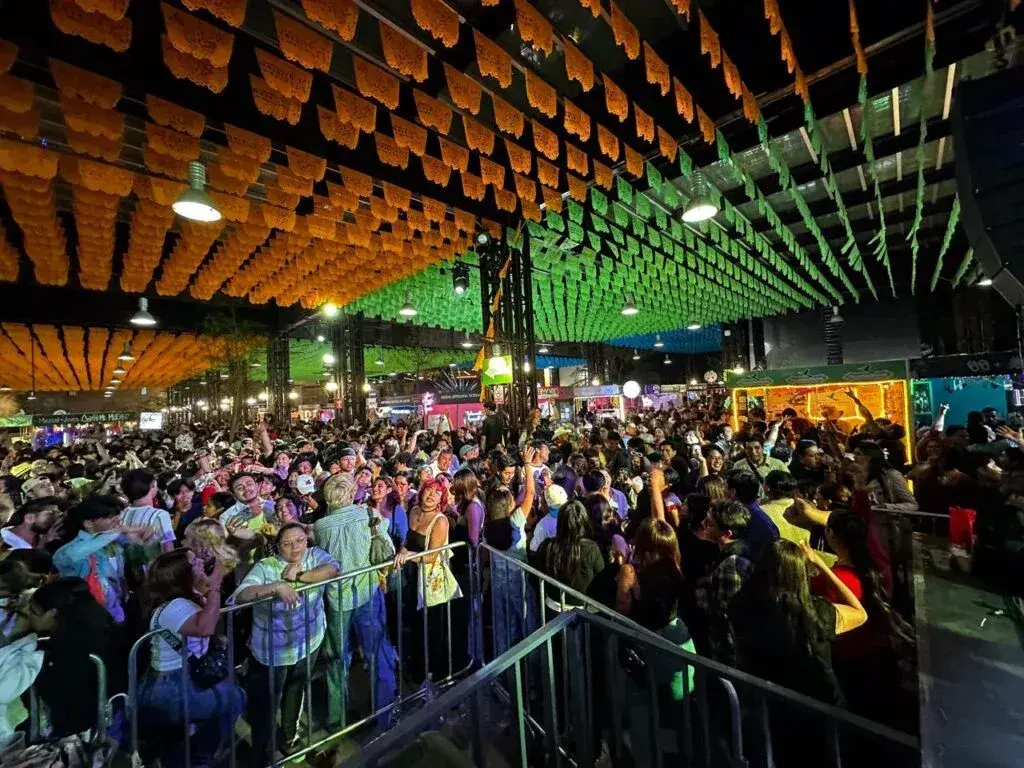
Read the complete guide →July 28 is the favorite day for people who know the fair. The closing program brings the best musical acts of the entire run — brass bands, tropical ensembles, everything that makes Oaxacan parties what they are. And on the commercial side: producers face strict next-morning tear-down schedules and can't leave with open bottles, so the last two hours see real discounts on open inventory. It's the best time to buy something special at a better price.
Editorial GuideJul 17–28 2026Certified producers, agave varieties, how to taste, logistics and what makes this fair unique. July also features the Guelaguetza (July 20 & 27) — book accommodation early.
Read the complete guide →Practical questions answered — venue, tickets, what to taste, how to get there.
The Feria Internacional del Mezcal (FAIM) 2026 runs July 17–28 in Oaxaca. It overlaps with the Guelaguetza (July 20 & 27), making these two weeks the most culturally packed time to visit Oaxaca.
General admission is $80 MXN per person. Entry is free for children under 12 and seniors with an INAPAM card. Proceeds go to the Hogar Primavera de Vivienda Bienestar Oaxaca social program. Bring cash — not all stands have card terminals.
At the Centro Cultural y de Convenciones de Oaxaca (CCO), located in the municipality of Santa Lucía del Camino — about a 15-minute walk east of the historic center. Not in the Ethnobotanical Garden; the CCO is a separate venue.
Three options: (1) BinniBus — the state government runs special routes from key points in the historic center during the fair; (2) Taxi — roughly $70–100 MXN from downtown depending on traffic; (3) Walking — about 15 minutes on a direct route, which many locals prefer to avoid traffic jams during Guelaguetza season.
The CCO hosts 100–106 certified mezcal companies, 208 artisans (black clay from Coyotepec, alebrijes from San Martín Tilcajete, textiles), 20 food stands with traditional Oaxacan cuisine, 16 craft breweries with an outdoor stage, and 14 coffee and traditional beverage brands. Plus live music every day.
Start with espadín (Agave angustifolia) — it's the most common, approachable, and affordable, and gives you the baseline to understand mezcal. Then try a madrecuixe or cuishe for something more mineral. If you're feeling adventurous, ask for a tobalá (wild agave, complex and floral) or an ensamble (a blend that shows a producer's creativity).
Producers offer small sample pours — a few milliliters — so you can evaluate a mezcal before buying. These aren't meant for drinking your fill; they're tasting portions. Treat them like a wine tasting: sip, decide, buy if you like it. Respecting this dynamic is basic fair etiquette.
Absolutely. July 28 is the favorite day for regulars: the closing program brings the best live music of the whole run, and producers offer discounts on open bottles and excess inventory they can't take home (regulations prohibit leaving with open bottles). The last two hours are prime time for deals.
Mezcal is the parent category: it can be made from 30+ agave varieties using traditional methods (earth-pit roasting, tahona grinding). Tequila uses only blue agave and is mostly industrial. Oaxaca produces about 80% of Mexico's mezcal. At the FAIM you'll find artisanal and ancestral mezcals — the most traditional tier of production.
Yes — and fair season is one of the best times. Palenque tours in the Central Valleys and Sierra Sur run daily during July. You'll see the full production process and talk directly with maestros mezcaleros. Most tour agencies in the historic center offer combined cultural stops.
